

Packers and Movers in Delhi for Homes, Small Offices and Vehicles
Plan house shifting in Delhi with provisional local starting guides of Rs. 5,500 for a 1 BHK, Rs. 8,500 for a 2 BHK and Rs. 12,500 for a 3 BHK. Agarwal (ALPM) Packers and Movers assesses your inventory, packing needs and access at both addresses before confirming the service scope and payable estimate. From a builder-floor staircase in Janakpuri to a booked goods lift in Dwarka, the practical access check matters as much as the address.
Whether you are moving a single room in Laxmi Nagar or a larger home in Greater Kailash, settle three basics before booking: the written price, the packing and arrival plan, and the condition check at handover. Describe the actual goods and access so that the plan fits your home.
Delhi moving overview
| Local 2BHK starting guide | ₹8,500; final scope and access determine the total |
| Moving address | Colony, block/pocket/sector, flat and actual goods gate |
| Pickup and drop slots | Plan packing, journey and unloading around both building windows |
| Truck access | Confirm vehicle approach and the door-to-vehicle carrying route |
| Other services | Intercity, office, few items, car/bike and holding assessment |
Get Free Quote
On this pageView sections
What a Delhi move with ALPM covers
For most Delhi households, a full move means packing, loading, transport, unloading and placing goods in the right rooms at the new address. Some customers want all of it; others pack their own clothes and books and only need furniture, kitchen items and appliances handled. Both are fine, as long as the written offer says which parts are included.
We handle household goods, office goods, local and intercity transport, assessed car and bike transport coordination, and requests for temporary holding. The exact transport mode, the scope of work and availability on your date are agreed for each move rather than promised in advance.
To get a scope-based estimate, share:
- Both full addresses, including colony, block, pocket or sector
- Floor level at each end and whether a usable lift is available for goods
- A room-by-room list of large items, plus a rough carton count or the number of cupboards to empty
- Anything that needs dismantling, special packing or a separate vehicle
- Your preferred date and whether it is flexible
A short video walk-through of each room is often the quickest way to make the inventory accurate. Check the inventory version attached to your offer. If you later add furniture, change a floor or need extra work, agree the revised scope and amount before the additional work starts.
Packers and movers Delhi charges: starting guides and what changes them
Local starting guides
These are starting points for budgeting a move within Delhi, not fixed prices. They assume a typical inventory for the house size and straightforward access. Your final amount comes from the survey or inventory review and is set out in writing.
| Move size | Starting guide | How the final amount is set |
|---|---|---|
| 1 BHK | From Rs. 5,500 | Inventory, access and packing scope |
| 2 BHK | From Rs. 8,500 | Inventory, access and packing scope |
| 3 BHK | From Rs. 12,500 | Inventory, access and packing scope |
| 4 BHK and larger homes | Survey based | Assessed after a survey |
| Few items | Survey based | Item list, size and both-end access |
| Office goods | Survey based | Asset list, building rules and timing |
Two homes of the same size can need very different amounts of work. A 2 BHK with a modular wardrobe, a large sofa set and a home library is a different job from a lightly furnished rented 2 BHK.
What your written offer should list
- Packing: which rooms and items, and the materials included
- Loading and unloading at each address
- Transport: vehicle arrangement and whether the load is dedicated or shared
- Dismantling and reassembly of named furniture, if included
- Placement at the new address and whether unpacking is part of the job
- Taxes, tolls and any other charges shown as separate lines
- Cover terms, if you choose them, with conditions and exclusions in writing
Items that are assessed, not assumed
Some costs depend on what we find at the addresses. Disclose these during the review so they can be assessed in the offer. Any later change needs your agreement:
- Stairs where no goods lift is available, judged on floors, turns and item size
- Long carry from where the vehicle can stop to the door
- A shuttle with a smaller vehicle if a larger one cannot reach the building
- Parking, entry or building charges at either end
- Specialist lifting where normal access is unsuitable, only after a separate professional assessment, required permissions and an agreed handling plan
- Holding goods before delivery
An itemised quote can show packing materials and labour as components of the agreed total. Check that an included component is not then added a second time. Compare the payable total and the inventory behind it, along with any exclusions.
What Is Included in the Quote and What Is Charged Extra
Use this list to agree the scope. The table is a checklist, not a promise that every component is automatically included or separately charged.
| Work to identify in the quote | Possible additional work to assess |
|---|---|
| Packing material: cartons, bubble wrap, stretch film, corrugated sheets | Staircase carrying beyond ground floor where there is no lift |
| Packing, loading, unloading and unpacking of main furniture | Wooden crate for glass tops, idols, artwork or very large TVs |
| Dismantling and refitting of normal beds and wardrobes | AC, geyser, chimney or water purifier uninstall and fitting |
| Applicable toll and tax treatment for the agreed route | Storage, if your new house is not ready on the delivery date |
| Transport in the agreed vehicle | Any optional cover and other clearly assessed items |
If you add an item or change the access details, agree any revised scope and price before the additional work starts.
Local Delhi, Delhi to NCR and intercity moves
Moves inside Delhi
Distance is one part of a local estimate. Packing work, item volume, the vehicle-to-door carry and access at both ends also affect the cost. For a Janakpuri-to-Dwarka move, confirm both the pickup staircase and the receiving lift slot; for Rohini-to-Saket, account for the actual cross-city journey as well. Ask for a complete day plan rather than treating driving time as the total moving time.
Delhi to an NCR city
Noida, Gurugram, Ghaziabad and Faridabad are separate destinations with their own society rules, entry points and access conditions. Treat them as a second address to prepare, not as an extension of Delhi. The receiving society may have its own move-in timings, lift booking and gate process, and these need confirming before the arrival time is fixed.
Intercity moves from Delhi, with a Delhi to Agra example
For intercity moves, the route, the transport mode and whether your goods travel in a dedicated or shared vehicle all affect the price and the delivery window. We do not use one nationwide rate. As one selected example only, these are provisional planning ranges for Delhi to Agra household moves:
| Move size | Planning range |
|---|---|
| 1 BHK | Rs. 9,500 to Rs. 12,500 |
| 2 BHK | Rs. 16,500 to Rs. 22,500 |
| 3 BHK | Rs. 28,500 to Rs. 36,500 |
These ranges apply to Delhi to Agra only. They do not tell you which end of the range a shared or dedicated vehicle falls into; that depends on your actual inventory and the arrangement agreed for your move. For any other city, we assess the route separately.
Shifting from Delhi to Gurgaon, Noida, Ghaziabad and Faridabad
A move to Gurgaon, Noida, Ghaziabad or Faridabad needs a separate receiving-address plan. Ask the building about goods entry, lift booking, any approval and the actual unloading window. Ask the operator which taxes or tolls apply to the chosen vehicle and route instead of assuming a blanket border fee.
Confirm the receiving arrangements before moving day. These ranges are provisional planning estimates, not a fixed ALPM tariff; inventory, packing and access set the written quote.
| Route | 1 BHK (approx.) | 2 BHK (approx.) | Planning window |
|---|---|---|---|
| Delhi to Gurgaon | Rs. 5,000 – Rs. 9,500 | Rs. 8,000 – Rs. 16,000 | Ask whether packing and unloading fit one day |
| Delhi to Noida | Rs. 5,000 – Rs. 9,500 | Rs. 8,000 – Rs. 16,000 | Ask whether packing and unloading fit one day |
| Delhi to Ghaziabad | Rs. 5,000 – Rs. 9,000 | Rs. 7,500 – Rs. 15,000 | Ask whether packing and unloading fit one day |
| Delhi to Faridabad | Rs. 5,000 – Rs. 9,000 | Rs. 7,500 – Rs. 15,000 | Ask whether packing and unloading fit one day |
Have applicable tolls, tax treatment and any assessed access charge identified once in the written payable total.
Delhi to Other Cities: Approx. Shifting Charges and Transit Time
For moves out of Delhi, compare the actual inventory, shared or dedicated arrangement, packing scope and receiving conditions. These are provisional budget and calendar guides, not company trip results or guaranteed tariffs. Confirm which stages the quoted window includes; consolidation and receiving delays can extend it.
| Route | 1 BHK (approx.) | 2 BHK (approx.) | Transit Time |
|---|---|---|---|
| Delhi to Jaipur | Rs. 9,000 – Rs. 15,000 | Rs. 13,000 – Rs. 22,000 | 1 – 2 days |
| Delhi to Chandigarh | Rs. 8,500 – Rs. 14,000 | Rs. 12,000 – Rs. 21,000 | 1 – 2 days |
| Delhi to Ahmedabad | Rs. 16,500 – Rs. 22,500 | Rs. 19,500 – Rs. 27,500 | 3 – 4 days |
| Delhi to Mumbai | Rs. 18,000 – Rs. 30,000 | Rs. 26,000 – Rs. 45,000 | 4 – 6 days |
| Delhi to Pune | Rs. 18,000 – Rs. 30,000 | Rs. 26,000 – Rs. 45,000 | 4 – 6 days |
| Delhi to Kolkata | Rs. 18,000 – Rs. 30,000 | Rs. 26,000 – Rs. 46,000 | 5 – 7 days |
| Delhi to Hyderabad | Rs. 20,000 – Rs. 32,000 | Rs. 28,000 – Rs. 50,000 | 5 – 7 days |
| Delhi to Bangalore | Rs. 21,500 – Rs. 30,500 | Rs. 27,500 – Rs. 40,500 | 5–7 days dedicated; 7–10 shared |
| Delhi to Chennai | Rs. 22,000 – Rs. 35,000 | Rs. 30,000 – Rs. 55,000 | 6 – 8 days |
Car or bike transport is assessed separately. Confirm applicable tax treatment and any optional cover in the same written total; the actual provider’s declared-value basis, terms and exclusions apply.
Services and when each one fits
House shifting
Full house shifting suits families who want the whole home packed and moved. It works best when the inventory is complete before the survey, including lofts, balcony storage and the space under beds, which are easy to forget and often hold more than expected. Tell us early about glass tabletops, large mirrors, idols, artwork and anything with sentimental value, so they get suitable packing and are listed separately.
List portable goods you own or are authorised to move. Wall-fixed items, wiring, plumbing and gas connections need the right person to disconnect them first, as explained further down this page.
Few items shifting
A few-items move suits a student taking a bed, study table and some cartons to a PG, someone sending a fridge and washing machine to a new flat, or a family moving one room's furniture. Send a clear list with approximate sizes and photos, plus the floor and lift details at both ends. A small load can still need two people and careful access planning, so access matters as much as item count.
Whether a smaller vehicle or a shared arrangement suits your load is decided after we see the list, and the written offer says which it is.
Office goods shifting
For small offices, the main questions are what moves, who signs off on it and when the building allows the move. Before the survey, prepare an asset list with desks, chairs, storage units, printers, computers and file cabinets, and mark which items belong to the landlord or a vendor. Your IT person should back up data, disconnect and label equipment, and handle reconnection; we pack and move the hardware. Commercial buildings often have service-lift slots and loading-bay rules that set the timing of the move, so ask your building management early.
Car and bike transport
Car and bike transport is assessed for each vehicle and route. Share the make and model, the pickup and delivery addresses and your date. As one selected example, car transport between Delhi and Agra has a provisional planning guide of Rs. 5,500 to Rs. 9,500. That guide does not distinguish car size or carrier type, so it should not be read as a price for an SUV, an enclosed carrier or an electric car. Bike transport and other routes are priced after assessment.
Before handover, note the vehicle's condition together with the person collecting it, remove personal belongings and agree in writing what cover applies, if any. Do not assume cover is included unless the offer says so.
Temporary holding
If you have to leave your current home before the new one is ready, you can request holding. Availability, location, duration, charges and handling terms are confirmed for each request in writing before you rely on it. Settle redelivery timing and who can authorise release before goods go into holding.
Small Shifting in Delhi: Single Items, PG Rooms and 1 RK
Not every move needs a full truck. A double-door fridge from Rohini to Pitampura, a PG room from Mukherjee Nagar to Laxmi Nagar, or a sofa and almirah going to Janakpuri each need an item-based estimate rather than a whole-house package.
Share item sizes, photos, floors and access at both ends. Ask whether a smaller vehicle or shared space is available and suitable, and compare the handling and delivery window in the quote. The crew size and vehicle are assessed for the actual goods.
- Single item shifting: fridge, washing machine, sofa, bed, almirah, dining table, gym equipment
- Student and PG shifting: North Campus, Mukherjee Nagar, Laxmi Nagar, Rajinder Nagar, Ber Sarai and Kalu Sarai
- 1 RK and bachelor flats: confirm packing, carry, journey and unloading time for both addresses
- AC removal and fitting: we can arrange a technician on request, charged separately
The Delhi address-to-room checklist
Delhi addresses can be hard to pin down. Two blocks in the same colony may have different gates, and a sector or pocket number can be the difference between the right building and a long walk. Run through this for both addresses before the date is fixed.
| Check | Why it matters | Who confirms |
|---|---|---|
| Full address with colony, block, pocket or sector and a landmark | Gets the team to the right building first time | You |
| Correct goods gate or service entrance | Some societies send goods through a different gate from residents | Society office or guard |
| Where the vehicle can stop | Decides carry distance and whether a shuttle is needed | You, then checked by our team |
| Carry route from vehicle to door | Steps, ramps, tight corridors and staircase turns add time | You, with photos or video |
| Lift door/cabin size, load rating and permission for goods use | Packed goods, handlers, trolleys and tools together must remain within the rated load and building-approved use | Building management |
| Lift or move-in slot timing | Sets when loading and unloading can start and end | Building management |
| Door and stair width against your largest packed items | A packed sofa or wardrobe is bigger than the bare item | You measure; our team checks |
| Name and number of an authorised building contact | Someone who can open gates or solve access issues on the day | You |
Access in Delhi varies building by building. A builder floor in Rohini or Janakpuri might have a narrow staircase with a tight turn, which calls for a handling assessment of a large wardrobe or double-door fridge. A Dwarka apartment might have a service lift that is only available in a booked slot. Some older market areas and lanes need a closer look at how a vehicle can approach. None of these is a rule for a whole area; they are reasons to check your actual building.
Vehicle entry rules and timings in Delhi can change. Before fixing arrival, have the operator confirm the actual vehicle class, move date, road approach and applicable current restrictions or permission requirements. A previously used slot is not proof that the same vehicle can enter on your date.
Landlord fixtures, owned goods and appliance work
In rented homes, mix-ups usually happen at handover. Make a simple list that separates what is yours and moving from what belongs to the landlord and stays.
- Usually stays: fitted geysers, ceiling fans, light fittings, modular kitchen units and built-in wardrobes, unless your agreement says otherwise
- Usually moves: your own furniture, freestanding appliances, curtains you bought and portable storage
- Check with the landlord: AC units, water purifiers, inverters and any fittings you added yourself
Routine moving labour covers packing, carrying, loading and basic dismantling and reassembly of furniture that is listed in the offer. Specialist work is different. Uninstalling a split AC, disconnecting a water purifier or chimney, or reconnecting gas or plumbing should be done by a qualified technician or the relevant service provider. If you want us to coordinate that, it needs to be named in the written scope.
For appliances, follow the maker's instructions. Many refrigerators should be emptied, switched off and dried in time for packing, but the right timing depends on the model. Washing machines often need draining and drying, and many front loaders have transport bolts or locks that should be fitted before moving. For inverters and their batteries, follow the maker's guidance on disconnection and transport. Use a qualified technician where preparation is unclear or required parts are missing. Remove transport locks before operating a washing machine, and follow the model-specific orientation and restart instructions for refrigerators.
For offices, record which end receives each item and who is authorised to release keys, access cards or company assets.
Packing choices by object
Good packing is matched to the object, the distance and how many times it will be handled. Even a short local move needs protection suited to the item. Longer journeys, additional handling or holding can change the packing plan.
| Item | Typical packing approach | What to tell us |
|---|---|---|
| Crockery and glassware | Individually cushioned in suitable cartons, with dividers or void fill and orientation chosen for the item | Approximate quantity and any fine or antique pieces |
| TV and monitors | Screen protection with padding, or the original box if you still have it | Screen size and whether wall mounts need removing |
| Sofa and upholstered chairs | Wrapped to protect fabric from dust and scuffs, with corners guarded | Number of seats and whether legs detach |
| Wardrobes and almirahs | Emptied, doors secured, corners and surfaces protected; dismantled if needed and listed | Whether it is modular, steel or solid wood, and its height |
| Beds and mattresses | Frames dismantled where designed to be; mattresses bagged or wrapped | Bed type and whether it has storage boxes |
| Glass tops and mirrors | Faces and edges protected; handling orientation and support chosen for the piece and vehicle restraint plan | Size and thickness |
| Clothes and linen | Cartons or suitcases, kept dry | Whether you will pack these yourself |
| Documents and valuables | Kept with you, not in the vehicle | Nothing; carry them personally |
Use a suitable soft protective layer between a finished surface and outer wrap; do not put adhesive tape directly on polished furniture. Keep dry goods and cartons ready for packing, label each carton by room and item count, and put furniture fittings in a labelled bag secured to the outer packing or listed in a carton.
Measure your largest items, then allow for packing. A wrapped sofa or wardrobe is larger than the bare piece, and that extra width matters at a narrow door or staircase turn.
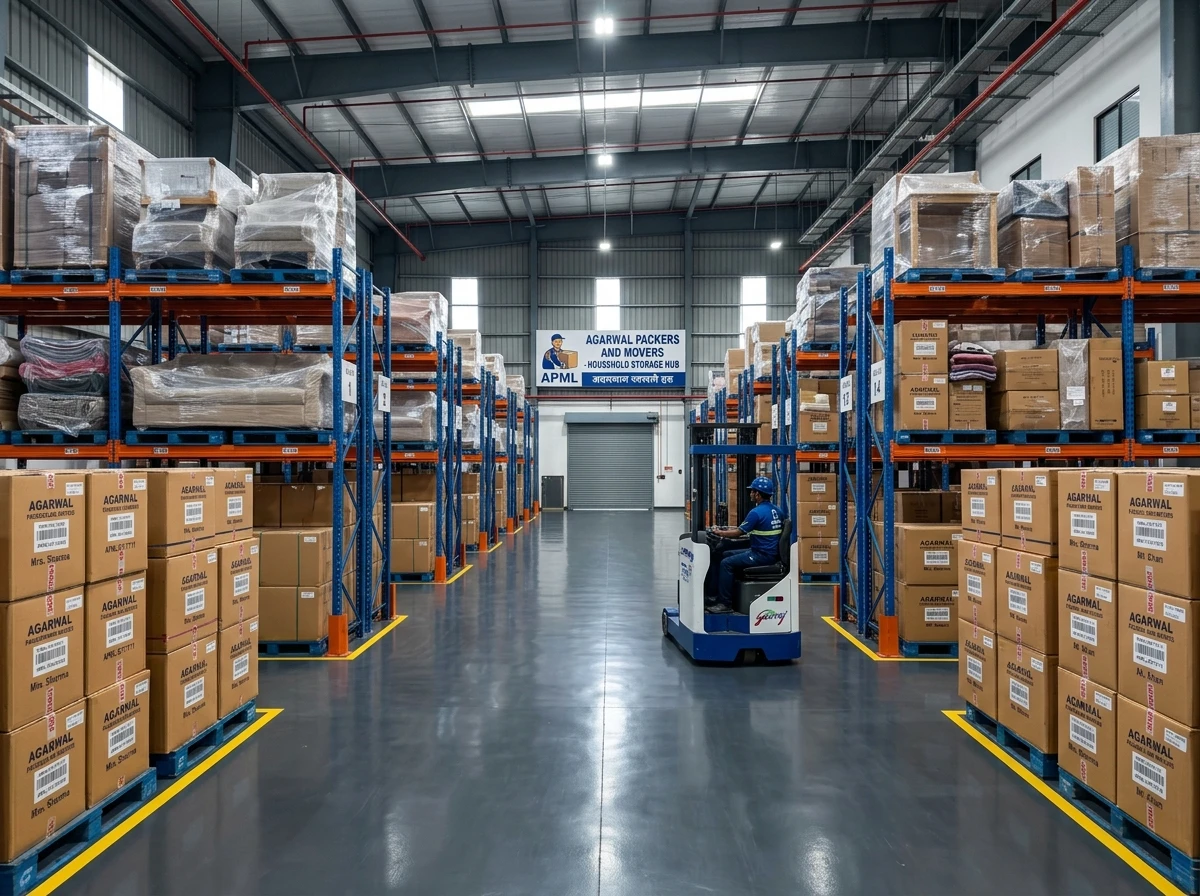
From enquiry to delivery: how the move runs
- Enquiry: call +91 94671 86002 or use the form with your move size, both addresses and preferred date.
- Inventory and access review: we go through your room-by-room list and both addresses, by survey or video, including the checklist above.
- Written offer: you receive the itemised scope, the final amount, any assessed extras, and cover terms if you choose them.
- Confirmation: you confirm the date and scope, and both buildings confirm gate, lift and timing arrangements.
- Packing and loading: the team packs as agreed, and the inventory is checked as goods are loaded.
- Transport: goods travel by the arrangement in your offer.
- Unloading and placement: goods are unloaded, placed room by room, and listed furniture is reassembled.
- Delivery check: you check items against the inventory and note any concern on the spot.
How long a local move takes depends on the whole day, not just the drive: packing time, loading at the first address, the journey, unloading and setup at the second, and whether both buildings are ready when needed. A move can lose an hour waiting for a lift slot even when the road is clear.
A hypothetical planning example
This is an illustration of how a move is planned, not a real customer job or a price.
Imagine a family moving a 2 BHK from a second-floor builder floor in a west Delhi colony to a fifth-floor flat in a Dwarka society. At the first address, the staircase has a tight turn and the lane allows the vehicle to stop close to the building. At the second, there is a service lift that needs booking.
- Inventory: two beds, a three-seater sofa, a dining set, a steel almirah, a modular wardrobe that belongs to the landlord, a double-door fridge, a front-load washing machine and an estimated 18 cartons recorded as a provisional count.
- Fixtures: the wardrobe and geyser stay; the split AC belongs to the family, so a technician is booked to uninstall it before packing day.
- Access: the family measures the staircase turn and the sofa; the team assesses the packed sofa and almirah against the stair landing and turn before choosing a carry plan.
- Timing: the Dwarka society confirms the service-lift slot, so loading is planned to finish with time to spare for the journey and the slot.
- Appliances: the family follows the fridge and washing machine manuals and arranges any required transport locks for the washing machine model and their removal before use.
- Written offer: packing, loading, transport, unloading, bed and dining set reassembly and the staircase carry are listed; the AC technician is arranged separately.
The point of the example is the order of decisions: inventory, fixtures, access at both ends, timing and then the written scope.
When the new home is not ready to receive
Delivery depends on the new address being ready. Before moving day, confirm:
- Keys or access will be available when the vehicle arrives
- The goods lift or move-in slot is booked for the right window
- There is somewhere for the vehicle to stop
- A person authorised to receive and check goods will be there, with a phone number on the offer
If any of these slips, the plan has to change. The choices are usually to wait, reschedule the unload, or move goods into holding and redeliver later. Each can affect cost, so agree in advance how delays at your end are handled.
If holding might be needed, settle these terms before the move: availability, exact location, named custodian, access arrangements, duration, charges, how goods and their condition are recorded going in, release authority, and the cost and window for redelivery. Holding is confirmed per request and should not be assumed.
How to choose a mover and avoid fake bookings
Before paying for a booking, confirm the business behind the name and the written scope. Similar names and a low phone estimate are not enough to identify who will pack, transport and deliver your goods.
- Ask for a GST number and check it yourself on the GST portal. The trade name on the portal should match the company name on the bill.
- Never pay a big advance on an unknown UPI ID or a personal number. A genuine mover gives the bank details in the company name.
- Get the quote on letterhead or email, with the full list of items, before the shifting day.
- Take the lorry receipt (bilty) with the truck number at the time of loading, and keep a photo of it.
- Be careful if the rate is far below everyone else's. Check whether packing, loading, transport, unloading and the actual inventory are all covered before comparing the headline figures.
Confirm the booking on 94671 86002 and our GSTIN is 36FDRPM0957B1ZC. If someone calls you in our name from any other number, please call us and confirm once.
Our details are:
- Trade name: AGARWAL LOGISTICS PACKERS AND MOVERS
- Brand: Agarwal (ALPM) Packers and Movers
- GST: 36FDRPM0957B1ZC
- Trademark: 7901417
- Registered location: Old Bowenpally, Secunderabad, Telangana
- Phone: +91 94671 86002
Why consider ALPM for your Delhi move?
You can discuss a household, office or vehicle enquiry directly with Agarwal (ALPM) Packers and Movers on +91 94671 86002. Start with your actual goods and addresses: a partly furnished rented flat, a complete family home and an office asset transfer need different preparation.
Ask us to put the agreed inventory, packing responsibilities, handling at both ends, transport arrangement and payable estimate into your offer. Keep the same scope when comparing another provider. The useful test is whether you can tell who will coordinate the work, what is included and what happens if your inventory or receiving access changes.
For a Delhi rental handover, flag landlord fixtures before the survey. For a society move, confirm goods-gate and lift arrangements at both ends. Those details let the enquiry address the job you actually need.
Practical moving checklist for Delhi
Two to three weeks before
- Make a room-by-room inventory, including lofts, balconies and storage beds
- Decide what to sell, give away or leave, so you are not paying to move it
- Separate landlord fixtures from your own goods and agree this with the landlord
- Ask both buildings about goods entry, lift booking and move timings
- Get written offers and compare them on scope, not only price
The week before
- Book any technician for AC, purifier, chimney or gas work
- Confirm the date, vehicle approach and arrival time with the mover
- Measure your largest items and the narrowest doors and stair turns
- Arrange keys and an authorised receiver at the new address
- Start packing items you can do yourself, if that is part of the plan
The day before and moving day
- Prepare appliances as their manuals advise
- Keep documents, jewellery, cash, medicines, chargers and laptops with you
- Photograph valuable furniture and electronics before packing
- Walk each room, cupboard and balcony before the vehicle leaves
- At delivery, check goods against the inventory and note any concern straight away
Best Time to Shift in Delhi, and When to Plan Extra
Leave room in the moving plan for weather, access and any current pollution-related vehicle restrictions. Discuss the actual date and vehicle with the operator:
- Pollution-related restrictions: If restrictions are active, confirm the latest applicable requirements for the vehicle class, fuel type, roads and direction of travel before dispatch. Do not rely on a general stage summary or assume that local moves are exempt.
- Winter fog: Early morning fog slows highway trucks, especially on the Delhi to Chandigarh, Amritsar and Lucknow side. For an interstate move, discuss weather allowance in the receiving window rather than fixing it from car driving time.
- May and June: The heat is the main problem. Agree a shaded staging area and a safe packing/loading slot; avoid leaving sensitive items exposed while the vehicle is being prepared.
- July to September (monsoon): Waterlogging is common in low-lying roads. Check the actual goods-door approach and dry staging space, and agree item-appropriate rain protection without sealing damp goods.
- Month end: If your lease handover falls near month-end, enquire early and confirm availability, lift slots and cancellation or rescheduling terms.
Areas We Cover in Delhi
Use the area groups below to describe your pickup or delivery address. Share your colony, block, building and goods entrance; service availability and the suitable vehicle are confirmed for the actual address.
South and South East Delhi
Saket, Kalkaji, Malviya Nagar, Hauz Khas, Greater Kailash, Lajpat Nagar, Defence Colony, Jangpura, Sarita Vihar, Jasola, Govindpuri, Badarpur, Mehrauli, Chhattarpur and Sangam Vihar.
For a builder floor or kothi, share the staircase turns, packed furniture dimensions and legal stopping point. The vehicle and handling team should be assessed from the building rather than the locality name alone.
South West Delhi and New Delhi
Dwarka, Palam, Vasant Kunj, Vasant Vihar, Mahipalpur, Bijwasan, Najafgarh, Delhi Cantt, RK Puram, Sarojini Nagar and Chanakyapuri.
For a Dwarka CGHS society or a gated development, ask the society office about the current move-in or move-out process, any required approval and the lift booking. Confirm these before fixing the vehicle arrival window.
West Delhi
Janakpuri, Vikaspuri, Uttam Nagar, Tilak Nagar, Rajouri Garden, Subhash Nagar, Punjabi Bagh and Paschim Vihar.
North and North West Delhi
Rohini, Pitampura, Shalimar Bagh, Ashok Vihar, Prashant Vihar, Model Town, Mukherjee Nagar, GTB Nagar, Kamla Nagar, Burari and Narela.
For a student or PG move around Mukherjee Nagar, GTB Nagar or Kamla Nagar, list the bed, study table, cooler and cartons you actually own. Confirm the room handover and receiving slot; a smaller vehicle may suit the load after assessment.
East and North East Delhi
Mayur Vihar, Laxmi Nagar, Preet Vihar, Patparganj, IP Extension, Shahdara, Dilshad Garden, Vivek Vihar, Yamuna Vihar and Karawal Nagar.
For Patparganj or IP Extension, check the receiving building’s goods-lift and gate arrangements. For an address in Laxmi Nagar or Shahdara, send approach photos and the exact stopping-to-door route; street access varies within each area.
Central and Old Delhi
Karol Bagh, Paharganj, Patel Nagar, Rajinder Nagar, Civil Lines, Daryaganj, Chandni Chowk and Sadar Bazaar.
For an Old Delhi address, check whether the booked vehicle can reach the goods door. If a carry or smaller-vehicle transfer is needed, agree a legal stopping point, safe route, handling method and charge before dispatch.