
Not accepted with household goods
- LPG cylinders, petrol, diesel and other flammable liquids
- Fireworks, explosives and corrosive chemicals
- Firearms and ammunition
- Perishable food
- Illegal goods

STATE-TO-STATE MOVING
Household, office goods and vehicle moves between states
Moving to another state means matching packing and transport to the actual journey, choosing a suitable vehicle arrangement, and timing delivery with your new home. We plan the move from an itemised inventory, and agree the mode, dates and delivery in writing before anything is packed.
Interstate relocation means moving household goods, office goods or a vehicle across a state boundary. Distance isn't the defining feature. A move across a state border can be short, while a long move can stay within one state. Plan the actual road journey, transport mode, applicable paperwork and delivery access for both addresses. Crossing a border alone does not determine the price or the transit time.
On longer journeys or routes involving transfer handling, goods can face more vibration and additional handling. Short moves also need protection suited to the items. Fragile and heavy items need packing suited to them. Each carton is numbered on an inventory so the count can be checked at both ends.
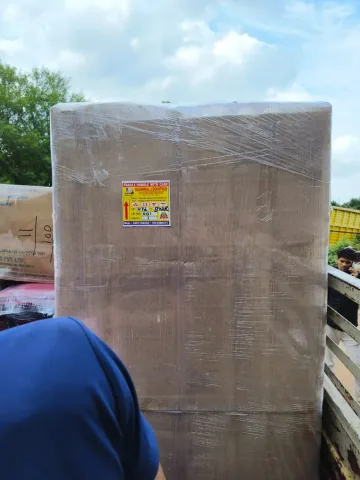
Both modes can work well. The right one depends on how much you are moving, how fixed your dates are, and your budget.
| Point | Dedicated vehicle | Shared load (part load) |
|---|---|---|
| Space | The whole vehicle is booked for your goods | Your goods share a vehicle with other consignments; the quote is based on your assessed load and the operator’s pricing basis |
| Dispatch | Usually leaves after your goods are loaded | Leaves when the planned consignments for that trip are loaded, which may be after your pickup |
| Handling on the way | Goods usually stay on the same vehicle | Goods may be transferred at a hub or delivered on a smaller vehicle for the last stretch. Ask if this is planned. |
| Cost | Higher, as you pay for the whole vehicle | Often lower for smaller loads; the saving depends on the route and volume |
| Often suits | Larger homes, fixed dates, or goods you want kept together | Smaller homes and a few items, with flexible dates |
Fragile items need good packing in either mode. A dedicated vehicle still has driver rest stops on long routes, so it does not travel non-stop.
These are provisional planning guides by road distance and home size, not a fixed tariff. Your route, goods, access and transport mode set the actual quote, which can be above the top of a band, particularly for long or remote routes.
A rough guide only. Your quote depends on your actual inventory, route and transport mode.
| Distance Bracket | 1 BHK Shifting | 2 BHK Shifting | 3 BHK Shifting | 4 BHK / Villa | Bike Transport | Car Carrier |
|---|---|---|---|---|---|---|
| 200 – 500 km | ₹12,000 – ₹18,000 | ₹16,000 – ₹24,000 | ₹22,000 – ₹32,000 | ₹30,000 – ₹45,000 | ₹2,500 – ₹4,500 | ₹6,000 – ₹10,000 |
| 500 – 1,000 km | ₹16,000 – ₹25,000 | ₹22,000 – ₹34,000 | ₹30,000 – ₹44,000 | ₹42,000 – ₹60,000 | ₹3,500 – ₹6,500 | ₹9,000 – ₹15,000 |
| 1,000 – 1,500 km | ₹20,000 – ₹30,000 | ₹28,000 – ₹42,000 | ₹38,000 – ₹55,000 | ₹52,000 – ₹75,000 | ₹4,500 – ₹8,000 | ₹12,000 – ₹19,000 |
| 1,500 – 2,500+ km | ₹25,000 – ₹38,000 | ₹35,000 – ₹52,000 | ₹46,000 – ₹68,000 | ₹65,000 – ₹95,000+ | ₹6,000 – ₹10,500 | ₹16,000 – ₹26,000 |
The household guide ranges cover the standard packing, loading, transport, unloading and highway tolls stated in the current guide. Confirm the inventory, packing materials, rooms for placement and access assumed in your quote. Check whether crates, special handling, restricted access, unpacking, storage and optional transit cover are included before adding any separate charge. Applicable GST is identified on the invoice. The car and bike columns are vehicle transport guides, not household packages. Routes shorter than 200 km, remote access and longer journeys need a route-specific quote.
Ask what the quoted “transit time” starts and ends with. Plan your keys, leave and receiver around all four stages.
These count from dispatch to arrival and are conditional on route, weather, road conditions and transport mode. They are planning guides, not guaranteed times.
| Road distance | Rough transit time |
|---|---|
| 300 – 800 km | About 24 – 48 hours |
| 800 – 1,500 km | About 3 – 5 days |
| 1,500 – 2,500+ km, dedicated | About 5 – 8 days |
| 1,500 – 2,500+ km, shared | About 7 – 11 days |
For a shared load, add the wait between pickup and dispatch. Ask for the expected dispatch date in your quote.
Ask your mover to describe every point where your goods will be handled, so you know when to check the count.
| Stage | What happens | What to record |
|---|---|---|
| Loading | Goods are loaded at your home | Carton count, item condition, vehicle number, driver's contact |
| Transfer (if planned) | For some shared loads, goods move to another vehicle at a hub | Whether a transfer is planned, where, who keeps the count and condition record, and who provides an update |
| Last mile (if needed) | A smaller vehicle delivers if a large truck can't reach your building | Who arranges it and whether it is in the quote |
| Unloading | Goods are unloaded and carried to your rooms | The carton count against the inventory and any visible damage, noted before signing |
Quotes are only comparable if they are based on the same goods and the same scope. Give each mover the same inventory, then check each line:
| Line | Check |
|---|---|
| Packing | Which items are packed, and whether crates are included |
| Loading and unloading | Floors, lift use and carry distance assumed at both ends |
| Transport | Dedicated or shared, vehicle size, transfers and last-mile delivery |
| Tolls and route costs | Included or added separately |
| Unpacking and reassembly | Which furniture is reassembled, and whether unpacking and packing material removal are included |
| Transit cover | Whether it is offered, the insurer, and the premium basis |
| Storage or holding | The cost if delivery is delayed at your request |
| Taxes | Whether GST is included or added |
Watch for lines that appear twice, for example unloading charged both in the move package and as separate labour.
Long journeys can mean prolonged vibration and, where transfers are planned, extra handling. Packing is chosen item by item at the survey.
TVs go in their original box or a padded carton or crate that supports the frame with no pressure on the screen. Appliances are prepared as their manuals direct; fridges are defrosted and dried, and washing machines get transport bolts if the model needs them. Some appliances need the brand's service team or a technician.
These five stages help organise the agreed move; the work and dates depend on your booking.
A video or in-person survey of your goods and access at both ends. The written quote states the mode, scope, what is included, and the expected pickup and dispatch dates.
Items are packed with materials suited to each. Every carton is numbered and listed on the inventory, which you sign.
Heavy items are loaded low and fragile cartons where nothing rests on them, and the load is tied down. You get the consignment note, with the vehicle number and the driver's or coordinator's contact.
Ask how you will get progress updates on the journey, and whether any transfer is planned.
Goods are unloaded and placed in your rooms, and furniture is reassembled where included. The count is checked against the inventory before you sign, and any problem is noted on the delivery copy.
For office moves, your IT team or vendor handles data backup, shutdown and restart. The movers handle the physical move. See office relocation.
The documents depend on what you are moving. These are the usual ones. Your transport operator confirms what applies to your consignment.
| What you are moving | Usual documents |
|---|---|
| Used personal household goods | Consignment note (LR or bilty) and the signed inventory. Used personal household effects are listed among goods exempt from the e-way bill requirement. |
| New purchases or commercial goods | Purchase invoices. Depending on the goods and their value, an e-way bill may be needed. Ask your mover. |
| Office or business assets | Invoices or a delivery challan, the asset list, and an e-way bill where the rules require it. Check with your accountant. |
| Personal car or bike | Registration certificate copy, valid insurance copy, and the carrier's receipt with the vehicle's condition recorded |
Registering a vehicle in a new state is separate from transporting it. If you will keep using the vehicle in the new state, its registration, road tax and any NOC are handled with the transport department (RTO). Check what applies to your case.
Keep the consignment note, inventory, cover documents and payment receipts together through delivery and any unresolved report or claim.
Transit cover is optional for household goods, but worth considering for a long journey. If you take it, read the actual policy, not a summary.
For more on cover options, see transit insurance.
Ask about moving your car or bike alongside the household booking. It may travel separately on a carrier or as a separate consignment, with its own collection, dispatch and delivery dates. Confirm availability for the vehicle and route.
See vehicle transport for more detail.
If keys, finishing work or society approval are still pending, plan for that before dispatch. Check these before dispatch, not on the day of delivery.
If delivery has to be delayed, ask in advance about holding the goods. Agree the storage cost, how goods will be released, and the cost of re-delivery before you agree to the delay. See storage services.
Route pages give more detail on distance, timing and planning. Moving between other states or smaller cities? Send us your route.
Enquire about another route