

Packers and Movers in Noida for Homes, Rooms, Offices and Vehicles
Plan house shifting, a room move, office relocation or vehicle transport from Noida with Agarwal (ALPM). Local 2BHK budgeting starts at ₹8,500; inventory, packing and access determine the total. Confirm the full locality and loading gate, then fit packing, travel and unloading into the permissions and key times at both ends.
Noida moving overview
| Local 2BHK starting guide | ₹8,500; final scope and access determine the total |
| Moving address | Locality/authority, sector, block/project, tower and actual gate |
| Pickup and drop slots | Compare packing, journey, unloading and setup against both windows |
| Truck access | Measure clearance and the door-to-vehicle carrying route |
| Other services | Intercity, office, few items, car/bike and holding assessment |
Get Free Quote
On this pageView sections
Packers and Movers Charges in Noida: Starting Budgets and What Moves the Total
These figures are starting budgets, not ceilings and not all-inclusive prices. Packing, loading, transport and unloading are bundled only within the scope agreed in the quote. Your exact addresses and any extras decide the final total.
| Move | Starting budget | Notes |
|---|---|---|
| Local 1BHK | ₹5,500 | Within the scope agreed for the move |
| Local 2BHK | ₹8,500 | Within the scope agreed for the move |
| Local 3BHK | ₹12,500 | Within the scope agreed for the move |
| Local 4BHK or villa | Assessed | Priced from the inventory |
| Other intercity routes or vehicle destinations | Route assessment | See the destination-specific guide and confirm mode and scope |
| Few items, packing only, office list, holding | Assessed | No fixed number is published |
An illustrative 2BHK budget
This is an illustration, not an invoice. Suppose the assessed core price for a local 2BHK is ₹9,500, which is above the ₹8,500 starting figure, and the agreed long carry adds ₹1,000. The total is ₹10,500 before applicable GST or other listed charges. Packing is already part of the core price, so it is counted once. The starting figure of ₹8,500 is where a quote begins, not where it must end.
Extras to confirm, once each
- Feeder vehicle where the main vehicle cannot enter.
- Long carry, extra lift trips or stair carry.
- Specialist or very heavy items.
- Waiting time, including delays caused by keys or permission windows.
- Parking, permits and tolls that apply to your route.
- Tax and any transit cover you choose.
For each one, ask whether it is already inside the quote or a separate line. Count it only once. Date also matters: weekends and month-end are popular for moves, so confirm availability and the agreed price when you confirm the date, not later.
Worksheet 1: One Address Record for Each End of the Move
Noida addresses go wrong in small ways. The Gautam Buddh Nagar district directory separately lists the Noida, Greater Noida and Yamuna Expressway development authorities. Use the locality printed on your property address, including Greater Noida West where applicable, rather than shortening every address to Noida. A sector number alone does not tell a crew which authority, road or gate they are driving to. Write the address once, in full, and use the same record for the quote, the society office and the crew lead.
The record, line by line
| Line | What to write | Why it matters |
|---|---|---|
| Authority or locality | Noida, Greater Noida, Greater Noida West or Yamuna Expressway area, as printed on your lease, sale paper or utility bill | A quote built for one locality should not be applied silently to another, because the drive and the entrance can differ. |
| Sector, block or pocket | The full designation, not just the number | The same sector number can appear in more than one locality. |
| Project, tower and gate | Society or project name, tower or block letter, and the gate printed on your visitor pass | Large projects have several gates and towers that can be a long walk apart. |
| Floor and flat | Floor number and flat number | Decides lift trips or stair carry. |
| Service gate | The gate a moving vehicle is allowed to use, with a nearby landmark | A map pin may mark the main gate, which does not always admit goods vehicles. |
| Independent house or road front | Lane or road name, width at the narrowest point, and whether a larger vehicle can turn | Tells the planner whether a smaller feeder vehicle is needed. |
| Receiver on the day | Name and phone of the person who will meet the crew | Someone must be reachable at each end when the vehicle arrives. |
Residential receiver and office asset receiver
For a home, the receiver is usually the person who decides where furniture goes. In an office, the person who can unlock the floor is often not the person who knows where each workstation belongs. If they differ, name both, and note who signs for the asset count at each end. Name whoever can make placement decisions and whoever is authorised to accept the inventory.
What this record cannot settle
It tells the crew where to go. It does not tell you what the society or building requires. Notice periods, deposits, permitted hours and Sunday rules differ from one society or office park to the next, and there is no single Noida rule. Ask the society office or building manager, then write down what they said, who said it and on what date. Carry that note on moving day.
Worksheet 2: Measure the Carry and Plan the Day Backwards
A drive between sectors is only part of moving a flat. Walk the route from the actual vehicle stopping point to your door and record the lift or stair constraints at both ends. Share these observations before the crew and vehicle are assigned.
The carry and lift cycle
- Stand where the vehicle will actually park, not at the main gate. Walk to the service lift or stairs and note the minutes, plus any ramp, step or gate on the way.
- Time one full lift cycle: call the lift, load it, ride to your floor, unload and send it back. Note whether the lift is shared, booked or limited to a window.
- Check your largest items against the lift door and the landing turn: wardrobe, bed frame, refrigerator, sofa.
- Note any basement or stilt height limit. If a taller vehicle has to stay outside, the carry gets longer.
- Ask the crew lead to estimate carrying and lift cycles from your inventory and safe lift capacity. Allow for lift sharing, loading and unloading rather than assuming an empty-lift test predicts every trip.
Give these numbers to ALPM at enquiry. A long carry, extra lift trips or waiting time should then appear in the written quote as an included item or a separate line, not as a surprise on the day.
Same-day critical path: a worked illustration
The table below is a hypothetical schedule that shows the method. It is not a record of an ALPM trip, and it is not a promise for your addresses. The journey slot is an allowance for two made-up addresses; your own figure comes from the two entrances you measured.
| Step | Window | Length |
|---|---|---|
| Packing | 8:00 to 11:00 | 3 hours |
| Loading | 11:00 to 12:00 | 1 hour |
| Journey allowance | 12:00 to 13:00 | 1 hour |
| Unloading | 13:00 to 14:30 | 1.5 hours |
| Reassembly of listed items | 14:30 to 15:00 | 0.5 hour |
That adds up to seven hours from the first carton to the last listed reassembly. It is a work clock, not a road clock; only one of those hours is on the road. Real timings are assessed from the inventory, the lift cycles, the gate carry and key availability.
Does the drop window fit?
Work backwards from the receiving end. A drop-side slot of 13:00 to 16:00 fits the illustration: unloading and listed reassembly finish at 15:00, which leaves one hour of contingency. A slot that ends at 14:00 does not fit, because unloading alone runs to 14:30 and setup follows. When a slot is too short, the choices are an earlier start, a shorter reassembly list, setup on a second visit, or asking the society whether the window can be extended.
Check pickup the same way. If the pickup lift is available only for part of the morning, the work that uses the lift must fit inside its slot; packing inside the flat can follow the separately approved crew hours, and the journey slot moves with them.
Contingency, agreed before loading
If keys at the drop address are not ready, any waiting period must be agreed, and the lift or gate window may close during the delay. Before loading, confirm how long the crew can wait, any waiting rate and who can approve a changed plan. If the keys are still unavailable, ask whether a later permitted unloading slot, an assessed holding arrangement or a revised delivery date is feasible. Confirm availability, custody, handling, cover and the added cost before choosing; none of these fallbacks is automatic.
Worksheet 3: Keys, Fixtures and Lease Handover Apart from Carton Acceptance
Two different handovers happen on a moving day, and they are easy to blur together. One is between you and your landlord, society or builder. The other is between you and the moving crew. Each needs its own record, kept by a different person for a different purpose.
| Record | Between | What it covers |
|---|---|---|
| Property handover | You and the landlord, society or builder | Keys, access cards, meter readings, fixtures and the condition of walls, floors and fittings |
| Goods acceptance | You and the moving crew | Item or carton counts, visible condition of furniture and appliances, and a same-day check on delivery |
Property handover record
- Count the keys: main door, almirah, balcony, parking remote, lift or access cards, intercom fob. Note who gave and who received each set.
- Photograph meter and utility readings with the date visible.
- List fixtures that stay and fixtures that go, according to your lease or sale papers. Modular kitchens, geysers, chimneys, air conditioners, light fittings and built-in wardrobes are the usual ones to argue about.
- Photograph existing marks on walls, floors and fittings before the crew arrives.
This record belongs to you and the other party to your agreement. A mover does not decide who owns a fixture. If a fixture is unclear, confirm ownership and removal permission with the other party before it is dismantled.
Goods acceptance record
- Sign an inventory at loading, counted by item or by carton, with visible condition noted on furniture.
- Mark cartons by room and agree which fragile or high-value items will be opened for the delivery check; record unopened cartons as such.
- At delivery, check the count first, then condition, while the crew is still there. Photograph anything damaged and write it on the delivery copy before signing.
Why keep them apart
Record damage to walls or fittings alongside the relevant handling details; record damage to transported goods against the inventory item. The people reviewing the property handover and the goods record may differ. Mixing them on one sheet makes both harder to follow up. Add one line to the property record: who holds the drop-address keys, from what time, and a backup contact if they are late.
Worksheet 4: Home-Office Shutdown and Restart
Keep the equipment move and the work restart on separate task lists. Decide who backs up files, disconnects the setup, accepts the equipment and tests it after placement. Moving the physical hardware does not automatically include restoring software, networks or subscriptions.
Who owns what
| Task | Owner | Note |
|---|---|---|
| Back up files and sign out of accounts | You or your IT support | Do this the day before, not on the morning. |
| Remove written passwords and PINs from devices and cartons | You | Crew and inventory sheets should never hold credentials. |
| Label cables at both ends and photograph the back panel | You, or the crew if it is in the agreed scope | A wiring photo helps match the labelled cables after delivery. |
| Pack monitors, CPUs, printers and furniture | Moving crew, within the agreed scope | List each item on the inventory. |
| Reconnect, configure network and software | You or your IT support | Not part of a standard household move unless the quote says so. |
| Sign for the asset count at the new place | Named receiver | Relevant mainly to office equipment. |
Keep private material with you
Keep personal laptops, external drives and recovery credentials securely with you. For employer-owned equipment or confidential business files, follow your organisation’s authorised custody and transport procedure. Do not list passwords on cartons or inventory sheets. Use device names such as grey Dell monitor, not logins. If equipment holds confidential data that must stay with a named person, that person should carry it.
Transport locks and restart, by device
The manufacturer's manual overrides this table. Where it says to wait before switching on or to fit a transit lock, follow it.
| Device | Before transport | Before restart |
|---|---|---|
| Desktop and monitor | Shut down fully, label cables, use fitted or manufacturer-appropriate screen protection and transport orientation | Check cabling against your photo, then power on |
| Laptop and external drives | Back up and hand carry | Reconnect and confirm the backup opens |
| Printer or multifunction device | Remove cartridges or toner as the manual directs and lock any carriage | Refit consumables and run a test page |
| Router and modem | Note provider and settings, label ports | Reconnect first, since other devices need it; shifting a connection to the new address is a separate request to your provider |
| Refrigerator and water purifier | Empty, drain and secure doors and trays as the manual advises | Use the model’s transport and restart instructions, including any required settling time |
| Washing machine | Drain, empty and fit transit bolts if the model uses them | Remove bolts and level it before use |
| Split air conditioner | Uninstall by a technician; confirm in the quote whether ALPM includes this | Reinstall by a technician; do not assume it is part of the move |
| CCTV recorder | Hand carry the recorder if it holds footage | Check cameras and storage after reconnecting |
Mention UPS units, battery packs and similar items on the inventory. Whether they can travel, and under what terms, is decided with the carrier, not assumed.
House Shifting in Noida: Homes, Single Rooms and Packing-Only Jobs
Full household moves
A household move from ALPM covers packing, loading, transport and unloading for the scope your quote lists. Flats in towers are mostly a lift and gate problem: how long the service lift takes, where the vehicle may stop and how far the carry is. Independent houses are more often a lane problem: narrow approaches, parked cars, and a vehicle that cannot reach the door. The quote should say which of these applies at each end. Unpacking, placement and furniture reassembly are done only where the quote lists them, so check for them in the written scope and not in this summary.
Local starting budgets are given for 1BHK, 2BHK and 3BHK moves in the charges section above. A 4BHK, villa or large independent house is assessed from its inventory instead of being given a headline number.
Single rooms, PG moves and few items
A student or PG tenant moving a bed, a mattress, a study table and a few cartons does not need a full-house crew, and should not be quoted as one. These moves are assessed from a short item list, with the floor, lift or stairs and distance at both ends. No fixed starting price is published for them here, because the result depends on the list. Send the list and a phone photo of the room. Ask whether a minimum charge applies and whether the vehicle is shared or dedicated. Say plainly if the move is a weekday evening or a hostel gate with a closing time, since those windows decide whether the job is workable at all.
Packing-only and unpacking-only requests
Some people have their own vehicle, or a family truck, and want the cartons packed properly. Others want help unpacking after delivery. Both are accepted as separate scopes and are assessed from the inventory, not priced from a number on this page. Make the scope clear: which rooms, which materials, whether furniture is dismantled, and whether the cartons are taken away afterwards or left. If the vehicle belongs to someone else, loading is a separate matter and should be stated.
Moves within NCR
Local moves cover Noida, Greater Noida, Greater Noida West and nearby NCR towns. Work out the distance from the two real entrances, not from the sector names; the Worksheet 1 record gives both. If the journey enters Delhi, read the routes section below.
Office Shifting in Noida: Physical Assets and Who Signs for Them
ALPM handles the physical side of an office move: desks, workstations, chairs, cabinets, storage, boxed files, and packed monitors and CPUs. It does not run IT migrations, network cabling projects or software moves, and the quote should say where its scope stops and your vendor's starts.
Start with an asset list
For a company, a numbered asset list is better than a general description of 20 workstations. Include tag numbers where assets are tagged, the floor they leave from and the room they go to. Add one named asset receiver at each end, who signs for the count. A tag list also makes insurance and fixed-asset reconciliation much easier afterwards.
Windows, permissions and timing
Office buildings and parks set their own rules on lift use, vehicle entry and after-hours movement. Weekend or evening work is arranged only when the building allows it and crew availability is confirmed in the quote. Raise it early, because a building that needs a written request will not respond on the day. Use the Worksheet 2 method for the carry and lift cycle at both ends, and test the receiving window against the unloading time.
Stock, new goods and business assets
Business consignments are treated differently from used household effects for e-way bill purposes. If the move includes commercial stock, new goods or high-value assets, check the consignment with the operator and your accountant before the date is fixed. The written quote states applicable GST.
Restart
Use Worksheet 4 for shutdown and restart ownership. For offices, network availability, power and desk allocation also affect the restart. Agree who is on site to receive and who is responsible for each system.
Intercity Moves from Noida: What to Settle Before a Destination Quote
Intercity cost depends on the destination and loading arrangement. A short Noida–Agra move and a long move to Bangalore need different budgets and delivery calendars; a single nationwide starting price would conceal that difference.
A short-corridor budgeting example
| Home size | Planning range |
|---|---|
| 1BHK | ₹9,500–₹13,500 |
| 2BHK | ₹14,500–₹22,500 |
| 3BHK | ₹22,500–₹35,500 |
These are route-specific budgeting guides. They do not assign a shared or dedicated mode: confirm the arrangement, inventory, access and included services in your quote. Other destinations and larger homes are assessed separately.
What the destination quote needs
- The full address, locality, actual unloading gate and receiver.
- Room inventory, floors and lift conditions at both ends.
- Shared or dedicated loading, plus the agreed consolidation and delivery windows.
- Key availability and any deadline for returning the old home.
- Separate vehicle, office-asset or holding requirements.
Keep the packing date, pickup, dispatch and delivery window distinct. Shared-load consolidation should be included in the quoted calendar or identified separately before booking. Arrange any holding gap before a loaded vehicle reaches a home that is not ready.
Car Transport, Bike Transport and Holding Requests
Pricing scope for vehicles
Quote a car or bike separately from household goods. For the approximately 200 km Noida–Agra corridor, the budgeting guide is ₹4,000–₹6,700 for a car and ₹2,700–₹5,800 for a bike. These general bands do not specify body class or enclosed carriage. Other destinations, premium vehicles, EVs and non-running vehicles need a model-specific assessment and confirmed carrier availability.
Preparing a car or bike
- Photograph all sides, the odometer and any existing marks on the day of pickup, with the date visible.
- Confirm required RC, ID and insurance copies; record the keys handed over and the person authorised to receive the vehicle.
- List accessories and remove loose personal items.
- Agree fuel and battery preparation with the carrier for the specific model.
- Note whether the vehicle starts and drives. A non-running vehicle needs different handling and is priced differently.
- Record condition at pickup and again at drop, and compare the two before signing.
Holding and short-term storage requests
If there is a gap between leaving one home and entering another, ask for a holding arrangement. ALPM accepts storage as a request: availability, location, duration and terms are assessed and confirmed for each move. Ask where the goods will be kept, how long, how you can get to them, what handling in and out costs, and what cover applies while they are there. Check that handling charges are counted once, not once for storage and again in the move.
Packing Materials: What Protects What
Good packing is a match between the item and the material, not a count of layers. The quote should list the materials by type, say whether they are included in the price and say what happens to them afterwards.
| Item | Typical protection | Point to settle |
|---|---|---|
| Books and heavy items | Small, strong cartons filled to weight | Carton count and who supplies them |
| Kitchen items and glassware | Cartons with bubble wrap, paper or foam between pieces, marked fragile | Whether crockery is wrapped piece by piece |
| Television and screens | Original fitted packaging where available, or manufacturer-appropriate cushioning, carton and transport orientation | Wall brackets removed by whom |
| Upholstered furniture and mattresses | Stretch film or covers against dust and moisture | Whether wrapping is in the quote |
| Wooden furniture | Blankets, foam and corner guards, with fittings bagged and labelled | Dismantle and reassembly scope |
| Appliances | Wrapped and secured, with transit locks fitted as the manual advises | Technician work for ACs |
The number of cartons depends on your books, kitchen and clothes more than on the flat size. A crew lead can estimate it from your list or video. Ask whether cartons are collected after unpacking, and whether packing and unpacking are both in scope. Materials already included in the base price should not appear a second time in the extras.
Declare fuel, chemicals, batteries and other restricted goods before packing. Use an appropriate authorised service for prohibited or regulated goods and keep them out of normal household cartons.
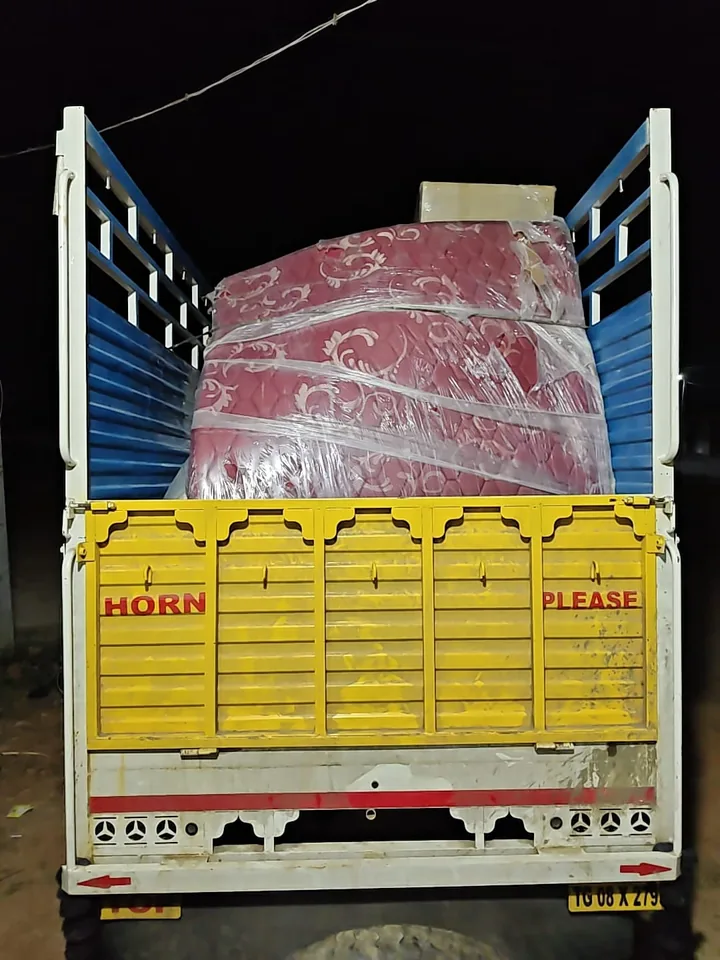
Inventory, Vehicle Size, Access and Routes
Inventory sets the vehicle
Volume decides the vehicle and the crew. Send a room-by-room list, a phone video or a set of photos. Mention heavy and awkward items: wardrobes that cannot be dismantled, a large refrigerator, a gym machine, a loft with stored boxes. A list made the day before is better than a guess made on the phone a week ago.
Access decides how the vehicle is used
| Access point | Question to answer | Effect on the move |
|---|---|---|
| Basement or stilt | What is the height limit? | A taller vehicle may have to stay outside, which lengthens the carry. |
| Service gate | Which gate admits goods vehicles, and when? | Sets the arrival time and the parking position. |
| Lane or road front | How wide is it at the narrowest point? | May require a smaller feeder vehicle and a second loading step. |
| Parking | Where can the vehicle stop, and for how long? | Decides loading speed and whether waiting is charged. |
| Permission window | When may the lift or vehicle be used? | Sets the latest start and the moving day schedule. |
Local distance
The useful distance is the drive between the two real entrances, not between two sector names. No single drive time covers every Noida pair, so ask for the plan to be built from your two service gates.
If the journey enters Delhi
Goods vehicle conditions for Delhi entry are set by the authorities and change, so check what applies to your vehicle on your date with the operator. Confirm the proposed vehicle category and whether the route enters Delhi before fixing the schedule.
What a Written Quote Should State
A written quote protects both sides because it turns a conversation into a scope. Before you pay an advance, check that it states:
- The pickup and drop address records from Worksheet 1.
- Floors, lift or stairs, and the expected carry at each end.
- The inventory, or a clear reference to it.
- The services included: packing, loading, transport, unloading, and any unpacking or reassembly.
- Packing materials, by type, and whether they are included.
- The vehicle and the loading mode, shared or dedicated.
- The date, the pickup window and the delivery window.
- Extras, each marked as included or separate.
- Applicable GST and any other listed charges.
- Transit cover, if you choose it, with the declared value and what it covers.
- The payment schedule and the cancellation and rescheduling terms.
GST and billing
Applicable GST is stated in the quote. ALPM is registered under GSTIN 36FDRPM0957B1ZC. If your employer reimburses relocation costs, ask them before booking which documents they accept, because requirements differ and no mover can guarantee an employer's policy.
Cover
Do not assume goods are covered. If you want transit cover, ask for it to be selected and written into the quote, with the declared value, what it covers and who issues it.
E-way bill
Under Rule 138(14) of the GST rules, used personal and household effects are generally exempt from an e-way bill. Commercial stock, new goods and business assets are different, so check those consignments with the operator or your accountant.
How a Noida Move Runs with ALPM
- Enquiry. Call +91 94671 86002 or use the enquiry form on this page. Share the address records, the inventory, the move type and any permission windows. The more precise the first message, the less back and forth later.
- Scope review. ALPM reviews the inventory, access and timing against your answers and may ask for photos or a video of the rooms, the carry route or the lift.
- Written quote. You receive a quote stating scope, vehicle, loading mode, extras, GST and terms, as listed above.
- Confirmation. You confirm the date and the windows. Contingency for waiting is agreed before loading.
- Packing. Materials are applied as listed. Cartons are marked by room.
- Loading and inventory. Items are loaded in sequence and the count is signed.
- Transit. The vehicle runs the agreed route. Live tracking is not assumed for every move.
- Unloading and placement. Goods are unloaded, placed and reassembled as per the listed scope.
- Same-day check. You verify the count and condition and record any damage while the crew is present.
How to Compare Movers and What You Get by Enquiring with ALPM
Apps, directories, local vendors and direct enquiry each suit different people. Apps give a set process and quick booking, directories give many numbers quickly, and a direct enquiry gives you one named business to hold to its written quote. Whichever route you take, ask the same questions.
| Question | A clear answer looks like | ALPM approach |
|---|---|---|
| Who is the contracting business? | A named business with GST and contact details | Agarwal Logistics Packers and Movers, also known as Agarwal (ALPM) Packers and Movers, GSTIN 36FDRPM0957B1ZC, trademark 7901417 |
| Is the price a start or a total? | A statement of what is included | Starting budgets are published as starting budgets; the total follows the written scope |
| How is the move sized? | From an itemised list | Itemised inventory and scope-led planning |
| What are the extras? | Each listed and marked once | Extras are stated as included or separate |
| What cover applies? | Named cover, value and issuer | Cover is selected and stated in the quote |
| What do I sign? | Inventory and delivery records | Inventory at loading and a same-day check at delivery |
Plan with ALPM
Use your enquiry to connect the room inventory, actual loading entrance and two-end timing plan. The written scope can then show the proposed vehicle, packing and furniture work, receiver, applicable extras and payment milestones. Keep a copy alongside the inventory so the same plan is available at pickup and delivery.
Damage, Cancellation, Rescheduling and Payment: Agree These First
This page does not set a universal policy. The terms for your move are the ones in the written quote and in ALPM's Terms and Conditions. These are the points to settle before you pay anything.
Damage
- Check the count and condition at delivery while the crew is present.
- Photograph any damage and write it on the delivery copy before signing.
- Report in writing as soon as possible, with the inventory and photos.
- What can be recovered depends on the cover selected and the terms in the quote. Ask what proof is needed for a claim.
Cancellation and rescheduling
- How much notice is needed to change the date?
- What happens to an advance if you cancel or reschedule?
- Is any charge made if the crew or vehicle has already been dispatched?
- Who bears the cost if the society or building refuses a window you arranged?
Payment
- What advance is asked for, and what is it adjusted against?
- When is the balance due, and by what mode?
- Will you receive a receipt for the advance and a GST invoice at the end?
Get the answers in writing, in the quote or in a message that you keep.