

Vehicle Transport Services in India: Safe Bike & Car Carrier Shifting
Confirm the carrier arrangement, packing, pickup and delivery access, transit updates and any insurance option for your vehicle and route before booking.
Compare Carrier Transport and Vehicle Handover Scope
Before choosing a transport arrangement, compare the total quote, planned driving, pickup/drop access, loading method, condition records and delivery window for your vehicle and route.
For a vehicle booking with Agarwal Packers and Movers (ALPM), confirm the carrier type, pickup and delivery handling, packing and insurance options in the written quote. Record the condition and odometer at both handovers, including any agreed driving for loading or pickup/drop access.
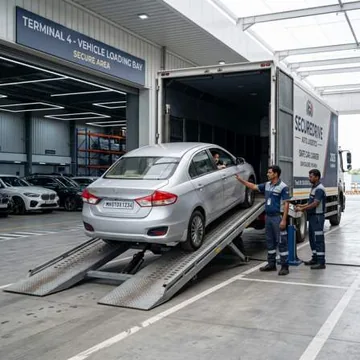
Vehicle Types and Booking Requirements
Confirm the booked carrier and handling requirements for your scooter, motorcycle, car, SUV or electric vehicle before comparing transport quotes.
Two-Wheeler & Bike Parcel Services
Confirm service for your route, motorcycle packing, loading, securing and pickup/delivery access in the quote.
- Vehicle Types: Activa/Jupiter scooters, 100cc–200cc commuter bikes, Royal Enfield Bullet/Classic/Himalayan, cruisers & superbikes (Kawasaki, Ducati, Harley, BMW).
- Packing: Ask which parts will be wrapped for your model. Mirrors, tank, console, exhaust and panels usually need cushioning and edge protection. Confirm whether crating is recommended and whether it is charged separately.
- Securing Method: Ask how the motorcycle will be supported and secured on the booked carrier, including the applicable wheel supports and tie-down arrangements.
- Preparation Requirements: Confirm fuel and battery preparation for your motorcycle model and booked transport method before handover.
Car Carrier & Auto Transportation
Open and enclosed carriers for moving private cars between cities. The carrier type for your booking depends on your vehicle's model, size, condition and ground clearance, and on what is available for your route and dates.
- Vehicle Types: Hatchbacks (Swift, i10, Tiago), Sedans (City, Verna, Ciaz), Compact & Full SUVs (Creta, Harrier, Fortuner, Scorpio), and Luxury Sports Cars.
- Loading Clearance: Confirm the loading method, ramp arrangement and ground-clearance needs for your exact vehicle before booking.
- Securing: Ask how your car will be secured on the booked carrier, including wheel supports and tie-down points suited to its model.
- Odometer Record: Record the reading at pickup and delivery; confirm any driving required for loading or pickup/drop handling in the quote.
Electric Vehicle (EV) Transport Logistics
Confirm preparation and handling for your exact EV model against its manufacturer's transport instructions and the booked carrier arrangement.
- Confirm Your EV Model: Provide the exact model and any transport instructions or existing vehicle warnings before booking.
- Battery Preparation: Ask for the charge-level requirements applicable to your exact model and booked transport method.
- Loading Instructions: Confirm the manufacturer-specified transport mode and handling method for your exact vehicle.
- Clearance Requirements: Confirm ground-clearance and loading needs for your model before the carrier is booked.
Check Your Vehicle Before Booking
Some vehicles can't be loaded the usual way, and finding out on pickup day costs time and money. Tell us about the following when you enquire, so loading can be assessed and the right carrier booked.
- Not running or not steering: a vehicle that won't start, steer or brake properly can't be driven onto a ramp. Loading has to be assessed in advance; do not assume it can be winched.
- Low ground clearance or modifications: lowered suspension, body kits, larger wheels or roof fittings can affect ramp loading and carrier fit. Share photos and measurements.
- Warning lights or existing damage: record them at handover so they are not mistaken for transit damage later.
- Large or heavy vehicles: big SUVs, premium cars and heavy motorcycles need the carrier's size and weight limits checked for your exact model.
- Electric vehicles: share the exact model and follow the maker's transport and charge-level guidance, as set out in the EV section above.
Open Multi-Car Carrier vs. Enclosed Container Trailer
Both carrier types can move a car between cities. The right choice depends on your exact vehicle, how much weather and road-dust exposure you can accept, and what is available for your route. Compare quotes on the same scope, not just the carrier name.
| Point to compare | Open carrier | Enclosed carrier |
|---|---|---|
| Structure | Open trailer, often carrying several cars | Covered box body; capacity varies by operator |
| Weather and dust | Vehicle is exposed to rain, sun and road dust during the journey | Vehicle is covered during the journey. Ask about exposure during loading and unloading. |
| When to consider it | Many everyday hatchbacks, sedans and SUVs, where the operator confirms the model can be loaded | When you want the vehicle covered, or when the operator or the maker's guidance recommends it for your model |
| Loading | Ramp loading; confirm your car's ground clearance suits the ramp | Loading method varies by operator; confirm it suits your car's clearance and condition |
| Cost | Usually lower, because space is shared | Usually higher. Compare written quotes for the same route, dates and handover points. |
| What to confirm | Securing method, any planned driving, and dispatch and delivery dates | Securing method, any planned driving, dispatch and delivery dates, and availability for your route |
Door-to-Door or Carrier Point: What Changes
Two quotes on the same carrier type can differ because one collects from your home and the other expects you to bring the vehicle to a carrier point. Check which one you are being quoted, and what happens on the first and last stretch.
| Question | Door-to-door | Carrier point (terminal) |
|---|---|---|
| Who moves the vehicle to the carrier? | Collected from your address, either loaded there or driven or carried a short distance to the carrier | You or an authorised person arrange delivery to the agreed carrier point; confirm a suitable transfer method if it cannot be driven |
| Where is the condition recorded? | Agree a condition record at your address before the vehicle leaves | At the carrier point; arrive early enough to check the record properly |
| Is any driving planned? | Ask, and agree the permitted driving in writing. Record the odometer at handover. | Record the odometer at handover and collection; agree any driving by the operator and your own transfer arrangements |
| Delivery end | Delivered to your new address. Confirm a large carrier can reach it, or how the last stretch is handled. | You or an authorised receiver arrange collection from the destination carrier point on the agreed date |
| Cost | Usually higher, because the first and last stretch are included | Usually lower; add your own travel and time to compare fairly |
Indicative Bike and Car Transport Charges
These are provisional guides by distance and vehicle category, for budgeting before a quote. They are not a fixed tariff. Your written quote depends on your exact vehicle, the carrier type, door or terminal handover, and your dates, and it can fall outside these ranges.
| Highway Distance Corridor | Scooter / Commuter Bike (100–150cc) | Cruiser / Royal Enfield (350cc+) | Hatchback (Swift / i10 / Tiago) | Sedan / SUV (Creta / City / Harrier) |
|---|---|---|---|---|
| Up to 500 KM (e.g. Bangalore to Chennai / Mumbai to Pune) | ₹2,500 – ₹4,000 | ₹3,500 – ₹5,200 | ₹7,000 – ₹10,500 | ₹8,500 – ₹13,000 |
| 500 – 1,000 KM (e.g. Bangalore to Hyderabad / Delhi to Lucknow) | ₹3,500 – ₹5,500 | ₹4,500 – ₹6,800 | ₹9,000 – ₹13,500 | ₹11,000 – ₹16,500 |
| 1,000 – 1,800 KM | ₹5,000 – ₹7,500 | ₹6,500 – ₹9,500 | ₹13,500 – ₹19,500 | ₹16,000 – ₹24,500 |
| 1,800 – 2,800+ KM (e.g. Jammu to Kerala / Guwahati to Pune) | ₹6,500 – ₹9,800 | ₹8,000 – ₹12,500 | ₹18,000 – ₹26,500 | ₹22,000 – ₹33,000 |
*Your quote is built from the distance, vehicle category and condition, carrier type, packing for the vehicle, loading and unloading, and whether pickup and delivery are at your door or at a carrier point. Transit cover, if you choose it, is priced by the cover provider and shown as a separate line. Applicable GST is shown on the quote and invoice. Large SUVs, premium cars, bikes above 350cc, EVs and non-running or modified vehicles are assessed individually.
Pickup, Dispatch and Arrival Dates
A vehicle booking has three separate dates: when it is collected from you, when the carrier leaves, and when it arrives. On a shared carrier, the vehicle may wait for the load to be completed before dispatch. Ask for all three dates in writing. If you are also moving your household, your vehicle may not arrive on the same day as your goods.
Indicative Vehicle Transport Planning Windows
For early planning, allow roughly 2–4 days on corridors up to 500 km, 3–5 days over 500–1,000 km, 4–7 days over 1,000–1,500 km, and 6–10 days on longer routes. Use these as planning estimates; confirm the collection-to-delivery window for your booking. Shared-carrier waiting, the exact route, vehicle handling and pickup or collection access can extend them. Ask whether your quoted window includes waiting before dispatch and the final delivery leg.
Planning for arrival
- Name a receiver and a backup, give the agreed contact numbers, and confirm the authorisation or identification format the operator needs.
- Give the receiver a copy of the pickup condition record so they can compare the vehicle at delivery.
- If nobody can collect it on the arrival date, agree beforehand where the vehicle will be held, who is responsible for it, the cost for each day, and how and when it will be released.
Vehicle Pickup and Handover Checklist
Before booking, confirm the pickup condition record, packing, loading, transit updates and delivery inspection with the provider.
Digital Inspection
Request a pickup condition record with the odometer, existing marks, fuel or charge level and dated photographs. Keep a copy for the delivery comparison.
Packing Scope
Confirm which mirrors, panels and vulnerable parts need protective packing, and which materials or crating are included in your quote.
Loading and Securing
Confirm the loading and unloading method for your vehicle model, its clearance requirements and how it will be secured on the booked carrier.
Transit Update Arrangements
Agree the contact, update channel and expected delivery window before dispatch. Confirm whether tracking is available for this booking.
Doorstep Joint Handover
Compare the vehicle at delivery with the pickup record. Note visible differences on the handover record, take photographs and retain the delivery receipt.
Confirm Documents for Your Vehicle Booking
Ask which document copies apply to your vehicle and booked consignment, who will arrange them and how they will be recorded at handover. Confirm the required format before dispatch:
Crucial Pre-Handover Preparation Guidelines:
- Fuel Preparation: Ask for the fuel-level requirements for the booked carrier and your vehicle model. Record the fuel level at pickup and delivery.
- FASTag Wallet: Confirm the provider's FASTag handling arrangements. Check any proposed account-setting or tag changes with the issuer before handover.
- Personal Luggage: Remove personal valuables and loose items before handover. Agree any accessories left with the vehicle, record them and check the applicable policy exclusions.
- Accessories & Antennas: Confirm which removable accessories should be secured or taken off for your vehicle model and booked carrier. Check any antenna or toll-tag changes against the manufacturer or issuer instructions, and record the agreed items at handover.
Transit-Insurance Terms and Damage Reporting
If you choose transit insurance, request the policy wording, declared value, premium, exclusions and reporting contact before dispatch. Cover and any payable claim depend on the applicable policy terms and claim assessment.
Confirm the policy provider and claims contact for any selected cover. Ask who will help with reporting and which documents or deadlines apply; do not assume a fixed settlement date.
Retain pickup photographs, the condition record, declared-value information and the delivery receipt so any reported difference can be documented.
Questions to Confirm Before Dispatch:
Popular Intercity Car & Bike Carrier Corridors
Explore the existing route information, then confirm the carrier schedule, quotation and delivery window for your booking.