

Packers and Movers Pune to Gwalior: Charges and Receiving Guide
ALPM quotes household, office, car and bike moves from Pune to the agreed Gwalior receiving point. The road journey is roughly 1,100 km. A 2 BHK planning guide is ₹22,500–30,000 shared or ₹32,000–42,000 dedicated, with estimated transit after dispatch of 4–5 or 3–4 days respectively. Compare the complete moving scope before booking.
Pune to Gwalior moving overview
| Road distance | Around 1,100 km planning guide; actual truck route and both addresses confirmed |
| 2 BHK planning guide | Shared ₹22,500–30,000 / dedicated ₹32,000–42,000; final assessed scope and total in writing |
| Transit after actual dispatch | Dedicated 3–4 days / shared 4–5 days; packing and consolidation before departure can add time |
| Receiving arrangements | Confirm actual home or nominated premises, authorised receiver and required approvals before dispatch |
| Car and bike | Exact model, carrier acceptance and separate handover calendar confirmed |
Get Free Quote
On this pageView sections
Pune to Gwalior road distance and route
Use roughly 1,100 km as an early Pune–Gwalior road-distance guide. NH52 and NH46 feature in a direct road option, with alternatives using other highway combinations. The actual goods-vehicle route depends on your Pune or PCMC pickup, Gwalior receiving point and conditions on the date.
| Planning point | Guide | Confirm for the booking |
|---|---|---|
| Road distance | Around 1,100 km | Exact addresses and suitable vehicle route |
| Dedicated household vehicle | 3–4 days after dispatch | Departure and receiving window |
| Shared household load | 4–5 days after dispatch | Consolidation before departure and delivery sequence |
Passenger driving time excludes packing, loading, driver breaks and unloading. For a household move, confirm when packing ends, when the vehicle actually departs and when the authorised receiver can accept the goods. These are separate events.
House shifting price guide from Pune to Gwalior
The ranges below are planning guides for a household of each size, shown for the two modes you can choose from. Your own figure is set after the inventory is listed and access at both addresses is checked, so a large or unusually heavy inventory may need an individual estimate outside the guide.
| Home size | Shared (part-load) | Dedicated vehicle |
|---|---|---|
| 1 BHK | ₹15,500–22,000 | ₹24,000–31,000 |
| 2 BHK | ₹22,500–30,000 | ₹32,000–42,000 |
| 3 BHK | ₹28,000–38,000 | ₹44,000–58,000 |
| 4 BHK | ₹36,000–48,500 | ₹55,000–75,000 |
How to read these ranges
Ask which packing, loading, road transport and unloading work the range assumes. If the quote breaks those tasks into rows, check that the rows reconcile to one payable total without charging the same work twice.
Some items are confirmed separately once the final payable total is written: GST, tolls (whether they sit inside the total or beside it), optional transit cover, technician work on appliances, difficult access at either end, and any goods holding. Ask for each to appear once in the quote, so nothing is counted twice or left out.
What moves your figure within a range
- Volume and bulky pieces: provide packed furniture dimensions, carton counts and any unusually heavy items.
- Packing needs: agree suitable protection for fragile screens, glassware and furniture, with manageable carton weights for books.
- Floors, lifts and carry distance at both ends.
- The receiving point in Gwalior: an ordinary home address and a controlled premises can need different arrangements, as the receiving sections below explain.
- Dismantling and refitting: beds, wall units and modular wardrobes take time, and some fittings, such as air conditioners, need a qualified technician.
Share a room-wise list and relevant item photos to support the survey, leaving private papers and valuables out of photographs.
Freight-only quote or full household move: compare like for like
When you search for this route you may see two very different kinds of figure. One is a freight or truck-hire figure, which prices carrying a load from one point to another. The other is a full household moving quote, which names the agreed work from Pune packing to Gwalior unloading and placement. They answer different questions, so they cannot simply be set side by side.
| Scope item | In a freight-only figure, check | In a full household quote, check |
|---|---|---|
| Packing and materials | Whether anyone packs at all, or whether you do | Who packs, and with what |
| Loading in Pune | Whether a loading crew is included | Crew and loading are included or listed |
| Road transport | What is priced: a whole vehicle, a share of space or weight | The mode, shared or dedicated, and its calendar |
| Unloading in Gwalior | Who unloads and to which point | Unloading to the agreed receiving point |
| Unpacking and assembly | Whether these tasks are offered or need a separate booking | Whether unpacking and furniture assembly are included |
| Last point of delivery | Where the vehicle actually stops | The confirmed receiving address and who receives the goods |
A rate per kilogram or per truck from a commercial freight service is for a different service. It does not turn into a household moving price, and this page does not suggest converting one into the other. For a like-for-like comparison, put the same inventory, the same two addresses and the same scope in front of each provider, and compare the totals that result.
Receiving point in Gwalior: home address or nominated institution
Most households receive their goods at an ordinary home address, for example in Lashkar, Morar or the City Centre. Some people receive personal household goods at a place run by an institution, where goods vehicles may need the premises’ approval before they enter. The two cases need different checks before dispatch.
An address in Morar or near Maharajpura still needs the exact residential receiving point. A public address listing does not establish access for a loaded goods vehicle. Where a residence is inside managed premises, have the resident or administrative contact confirm the required receiving approval before dispatch.
| Receiving point | Examples | What the receiver confirms | What the operator confirms |
|---|---|---|---|
| Ordinary home address | A flat or house in Lashkar, Morar or the City Centre | Society or building permission for a goods vehicle and lift, parking, the person present | The vehicle, route, dispatch window and carry plan |
| Nominated institution or controlled-premises receiving point | A residence inside premises that control entry | That the goods are approved to enter, and the named authorised person who will receive them | The vehicle and crew details the premises ask for, passed on privately through your resident or administrative contact |
For a personal household delivery, the receiver handles the premises’ approval through the appropriate resident or administrative contact. Tell the moving coordinator when the receiving point and authorised person are confirmed so the vehicle schedule can be agreed.
Older houses and market lanes in Lashkar
If your Lashkar home is reached through a busy market lane or has rooms above a shop, describe that approach separately from the house size. A delivery to the building’s street entrance may still leave a long carry or a tight staircase before the goods reach your rooms.
- Send a photo or short video from the nearest main road to the actual entrance. Identify a permitted standing point for the vehicle and the carrying distance without assuming the truck can stop at the door.
- Ask the receiver and operator whether a quieter unloading slot would help, subject to the street’s current vehicle access and the household’s availability. An early morning is an option to assess, not a city-wide permission or a guaranteed slot.
- Measure the usable staircase width and landing turns against the packed sizes of the largest pieces. A sofa that came down in a Pune lift may need a different handling plan at the Gwalior staircase.
- Agree any feasible dismantling, additional carrying or excluded item before loading, and record its effect on the price. If a piece cannot be handled safely, settle an alternative before departure rather than improvising in the lane.
Before dispatch: the receiving confirmation sequence
Whichever kind of receiving point you have, settle it before the vehicle leaves Pune, and put the result in writing. This order works for most moves.
- Give the operator the exact receiving address and say which kind of point it is: an ordinary home address or a nominated institution or controlled premises.
- For an institution or controlled premises, the receiver confirms that the goods are approved to enter and names the authorised person who will receive them.
- The operator passes the vehicle and crew details that the premises ask for through your resident or administrative contact, privately and not through public posting.
- For an ordinary home, the receiver checks society or building permission for a goods vehicle and the lift, and confirms where the vehicle can stand.
- The written quote records the receiving point, the named receiver, the dispatch window and who bears any extra handling.
- If the confirmation is not in place by the dispatch date, the date, the receiving point or the scope is revised in writing before the vehicle leaves, not on arrival.
If a change of receiving point is needed, name the handover location, who has custody of the goods, and the charges before anything moves. Do not assume the operator has a place nearby that can be used.
A worked example (hypothetical): Morar receiving coordination
This is an illustration, not a record of a past job. Imagine a family moving personal household goods to a residence at a controlled-premises address in Morar. The family is the receiver.
Before booking, they tell the operator that the receiving point is a controlled premises and not an ordinary home. They then confirm with the premises that the goods are approved to enter and name the authorised person who will receive them, which is usually a family member. The operator gives the vehicle and crew details the premises want to the family’s resident or administrative contact, privately. Dispatch is only confirmed once the family tells the operator that the entry approval and the named person are in place.
If the approval is still pending as the dispatch date nears, the family and the operator agree a revised date or a different receiving point in writing, with the handover location, custody and charges named. The revised quote records whether the changed date, address or handling affects the price; do not assume the original total still covers a different delivery arrangement.
Car and bike transport from Pune to Gwalior
Vehicles are priced by category, separately from household goods. The figures are planning guides, and the final amount depends on the actual vehicle and the booking.
| Vehicle category | Planning guide |
|---|---|
| Bike or scooter up to 150cc | ₹4,800–7,500 |
| Bike above 150cc or cruiser | ₹7,000–11,500 |
| Hatchback car | ₹12,000–17,500 |
| Sedan or SUV | ₹15,500–24,000 |
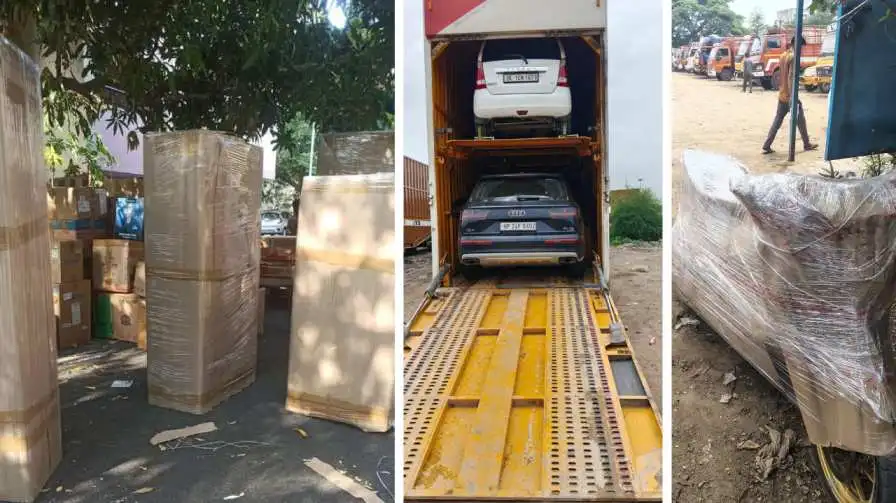
For a household-plus-vehicle booking, request separate scope and price lines followed by one combined payable total. The type of carrier and the packing are decided for the actual vehicle, not by the size of your home.
What to settle before booking
- Acceptance: tell the operator the exact make and model, the fuel type and whether the vehicle runs. Electric vehicles and non-running vehicles are assessed separately and may be handled differently.
- Carrier preparation and handover: ask the operator for their own instructions on fuel level, battery and loose items, and where and how the vehicle is handed over in Gwalior. Please follow those and not generic advice.
- Condition record: photograph the vehicle on all sides at pickup, note existing marks, and list accessories and keys handed over.
- Personal items: remove them from the vehicle unless the operator has agreed to carry them.
- Paperwork: keep your registration and insurance papers with you. For anything linked to registering the vehicle in another state, check with the RTO and ask the operator what they need from you.
- Calendar: confirm the carrier’s dates separately from the household move.
Small office moves from Pune to Gwalior
For office goods, provide an asset list and the actual receiving office rather than using a household BHK guide. Label computers, screens, desks and accessory cartons, record condition and name the authorised release and receiving contacts.
Confirm the loading point, entrance, lift access and any approved receiving window with the office. The employer should arrange data backups and qualified IT disconnection, reconnection and testing, and plan how staff work while equipment is in transit. Keep confidential originals with an authorised person.
Preparing furniture and appliances for the road
Match protection to the goods: cushioned cartons for fragile pieces, suitable outer protection for screens, and protected furniture surfaces and corners. Label dismantled components and their fittings together. Agree custom crating and specialist work only where assessment shows they are needed.
Furniture: measure before loading day
For each large piece, measure the packed width, height and depth. Then measure the usable door width at both ends, the lift cabin size and its load limit, and the turns on the stairs at both ends. A wardrobe that fits through the Pune door can still fail at a narrow staircase or lift in Gwalior, so share the measurements with the operator in advance.
The crew should confirm that each piece can physically be moved, and whether it needs dismantling, before loading, not at the door in Gwalior.
Appliances
- Keep the manuals, as they give the maker’s guidance for moving each appliance.
- Washing machines: have manufacturer-required transit bolts fitted for transport and removed before the machine is used again.
- Air conditioners: removal and refitting, including gas, electrical and plumbing work, needs a qualified technician.
- Other electrical, plumbing and IT connections: use qualified technicians for these too.
- Technician work is separate from moving unless the written quote says it is included.
Items to keep out of the load
Some things should not go on the vehicle at all, and others should travel with you.
- Excluded: fuel, LPG cylinders and fireworks.
- Keep with you: valuables, jewellery, cash, medicines and important documents, including any identity papers you may need at the receiving point.
- Declare first: plants. Acceptance is assessed before they are added to the quote and they may be declined.
- Declare separately: anything unusual, so the operator can decide before it is added to the list.
If you are unsure about an item, declare it. It is much easier to rescope a quote before loading than on the day.
Holding goods if the Gwalior receiving point is not ready
Sometimes the move date comes before the keys, or the entry approval at the receiving point is still pending. Holding goods is possible only if it is arranged, so do not assume it is part of a standard quote. If you need it, get these points written down before dispatch.
- Location: where exactly the goods will be kept.
- Operator: who runs the place or vehicle.
- Custody: whether goods stay loaded or are unloaded, and who holds the keys.
- Counts: an item or carton count at the time of handover.
- Condition: the condition of goods recorded on entry.
- Duration: the start date, the end date, and what happens if you need longer.
- Rate: the charge per day or week, and any handling charge on top.
- Access: whether you can visit or take something out during the period.
- Redelivery: the cost, the timing and the address it will be delivered to, including whether that address can change.
Holding changes the calendar and the final total, so confirm both once the arrangement is agreed.
Written quote, optional cover, payment and damage claims
What the written quote should show
- Your inventory, with photos or a video behind it, and both addresses with floors and access.
- The mode (shared or dedicated), the vehicle category if a vehicle is included, and the figure that covers the move.
- What is inside that figure and what is separate: GST, tolls, optional cover, technician work, difficult access and holding.
- The dispatch window and the planning calendar, with packing and consolidation time shown before departure.
- The receiving point in Gwalior and the named receiver, and what happens to the date, the scope and any payment if the receiving point or custody has to change.
Optional cover
Transit cover is optional and depends on the provider’s terms. It should not be treated as included unless the quote says so. Ask for the policy wording, how the declared value is decided, what is excluded, any time limits for reporting damage and how a claim is made.
Payment and damage claims
Before booking, confirm how much is paid in advance, when the balance is due, and whether any part is refundable if dates or the receiving point change. At delivery, check cartons against your list, note any damage on the delivery paperwork at the time, take photos, and keep the inventory, quote and payment records together for any claim.
Agarwal Logistics Packers and Movers, also known as Agarwal (ALPM) Packers and Movers, lists its Pune office at Office No. 18, Sector 24, Near Ramdev Dhaba, Transport Nagar, Nigdi, Pune 411044. Its registered office is in Old Bowenpally, Secunderabad. The phone number is +91 9467186002.
Record the receiving-point handover
At pickup, match the goods to the accepted list and keep the consignment reference. At the agreed Gwalior receiving point, reconcile package counts and visible condition with the named receiver before signing. Record any exception or changed custody and keep dated photos, the final invoice and payment receipts together.