

Packers and Movers Goa to Nagpur: Costs, Route and Delivery Planning
A 2 BHK move from Goa to Nagpur has a conditional planning guide of Rs. 24,000 to Rs. 33,000 after assessment, covering agreed packing, loading, road transport and unloading once. The selected driving route is roughly 1,025 to 1,100 km, and a dedicated road transit guide is 3 to 4 days after dispatch, with an indicative 6 to 8 days from pickup to delivery for shared loads, including consolidation. This page explains what changes those figures, and how to plan home and employer deliveries.
Goa to Nagpur moving overview
| Road reference | About 1,025–1,100 km from the selected Goa origin; actual endpoints vary |
| 2 BHK whole-move guide | ₹24,000–33,000 for agreed standard packing, loading, transport and unloading |
| Dedicated road transit | Indicative 3–4 days after dispatch; packing, handling and access waits separate |
| Shared-load window | Indicative 6–8 days pickup to delivery, including consolidation |
| Nagpur receiving plan | Separate home address, employer asset gate and vehicle handover |
Get Free Quote
On this pageView sections
Goa to Nagpur planning snapshot
Most people searching for movers on this route want three answers first: what it might cost, how far it is, and when their goods will arrive. The table below keeps the basis behind each answer separate, because a distance figure, a transit figure and a price guide are measured in different ways.
| Question | Planning figure | What it is based on |
|---|---|---|
| Whole-move cost, 2 BHK | Rs. 24,000 to Rs. 33,000 | Conditional guide after assessment; agreed packing, loading, road transport and unloading counted once |
| Route distance | About 1,025 to 1,100 km | Driving-mode map checks from a selected Goa starting point; your own addresses will shift it |
| Dedicated truck road transit | 3 to 4 days | Counted after dispatch; packing, loading, unloading and access waits are planned separately |
| Shared load, pickup to delivery | 6 to 8 days | Includes consolidation; subject to the agreed dispatch and receiving windows |
| Car or bike | Separate calendar | Carrier and dates are confirmed separately from the household truck |
The prices are budgeting guides, and the dates depend on your confirmed booking. They are there so you can budget and compare quotes sensibly. The written quote prepared after your inventory and access details are known is the figure to rely on.
Which service fits your move
The right starting point depends on what is actually travelling. Households, a handful of items, office assets and vehicles are priced and scheduled differently, so decide which group each of your items belongs to before asking anyone for a quote.
| What you are moving | Best suited to | The decision that matters most |
|---|---|---|
| Full household, 1 BHK to villa | Families and professionals relocating a whole home | The whole-move guide for your home size, and whether the load needs its own truck |
| A few items | A bed, sofa, appliance or some boxes, for example after a job offer or a student move | Volume and date flexibility, which usually decide between shared and dedicated space |
| Office physical assets | Desks, chairs, storage units, files and equipment going to an employer site | Who authorises release and who receives at the Nagpur gate |
| Car or bike | Owners who prefer not to drive more than 1,000 km | Carrier and model acceptance, preparation, and a separate dispatch date |
Many moves combine two or more of these. Identify which goods share a receiving point and which need separate consignments, receivers and handover records. Cars and bikes need their own confirmed carrier calendar.
House shifting cost guide from Goa to Nagpur
The amounts below are conditional planning guides for a whole move after assessment. Your inventory, access, transport mode and dates determine the assessed quote.
| Home size | Whole-move planning guide | What it generally assumes |
|---|---|---|
| 1 BHK | Rs. 17,000 to Rs. 23,500 | A smaller inventory with straightforward access at both ends |
| 2 BHK | Rs. 24,000 to Rs. 33,000 | A typical family inventory with furniture and a few appliances |
| 3 BHK | Rs. 32,000 to Rs. 43,000 | A larger inventory with several rooms of furniture and more fragile items |
| 4 BHK or villa | Rs. 43,000 to Rs. 62,000 | A large or heavy inventory, often needing more crew time at both ends |
What the guide covers
Each figure is a whole-move guide covering agreed packing, loading, road transport and unloading, counted once. Packing is already inside it, so do not add a separate packing amount on top. If another quote lists packing and moving in separate columns, add those columns together before comparing. Fuel, tolls, tax, optional cover and any access or specialist work should each be marked included or separate, once, in the final payable total.
What moves the figure up or down
- The real volume and weight of your inventory, not the flat size alone
- Stairs, lift availability and how far the truck must park from your door
- Heavy or bulky pieces such as wardrobes; specialist items need separate assessment and acceptance
- Special crating for glass, artwork or electronics, if assessed and agreed
- Reassembly or technician work, holding time and difficult access, each marked in the quote as either included or separate, once
Car and bike transport cost guide
Vehicles usually travel by carrier rather than on the household truck. The categories below are general planning guides, and acceptance depends on the vehicle, the carrier and the date.
| Vehicle category | Planning guide |
|---|---|
| Bike or scooter | Rs. 4,000 to Rs. 7,000 |
| Heavy bike | Rs. 6,500 to Rs. 10,000 |
| Hatchback | Rs. 10,000 to Rs. 15,000 |
| Sedan or compact SUV | Rs. 13,000 to Rs. 18,000 |
| Large SUV | Rs. 17,000 to Rs. 24,000 |
These figures are conditional on the exact model, the carrier, the transport mode, how the vehicle is prepared, acceptance by the carrier, and availability on your dates. Published figures for the same categories can differ noticeably between providers, so compare what each quote actually includes before comparing the number.
Before your vehicle is handed over
- Follow the carrier’s fuel and preparation instructions, remove loose items and take dated photographs from every side
- Note existing scratches and dents on the handover paperwork
- Ask whether personal items may stay inside, and get the answer in writing
- Confirm the carrier type, the dispatch date and who will be at the Nagpur end to take delivery
Distance and what the route figures mean
Driving-mode map checks on 17 October 2026, from a selected Goa starting point to Nagpur, showed three realistic options. One was about 1,027 km, roughly 17 hours 54 minutes, via NH 361. Another was about 1,091 km, roughly 22 hours 30 minutes, via NH 548C and NH 361. The third was about 1,031 km, roughly 19 hours 6 minutes, via NH 52 and NH 361.
That is where the working range of about 1,025 to 1,100 km comes from. Three cautions apply when you read it.
- Goa is a state, not a single point. A pickup in Panaji, Margao or Vasco will measure differently, and a delivery in Besa will differ from one in Hingna.
- The hours above are passenger-car route estimates; packing, goods handling, driver breaks and property access need their own allowances. They are not truck delivery times.
- A goods vehicle follows whichever road the carrier selects on the day. No single highway or checkpoint sequence should be assumed for your consignment.
Use the distance as a sense of scale, and use the written dispatch date and delivery window from your quote to plan the actual move.
Transit time: packing, dispatch and delivery window
Keep three stages separate: the packing day, the dispatch day and the delivery day. Ask for each one separately in writing.
- Packing and loading day: the crew works at your Goa address. Anything that delays access, such as a lift booking or a society permission, pushes everything after it.
- Dispatch day: the booked consignment begins its confirmed road movement. Road transit is counted from this point; shared-load pickup can happen before consolidation and dispatch.
- Mode and timing basis: allow an indicative 3–4 days of dedicated road transit after dispatch. For a shared load, the indicative 6–8 days runs from pickup to delivery and includes consolidation.
- Delivery window: the day the vehicle reaches Nagpur and your building or site accepts it. Waiting for a receiver, keys or a gate pass adds time that is not road time.
These are planning guides, and weather, traffic and load conditions can shift them. For a car or bike, ask for the vehicle’s own dispatch and delivery dates, because the carrier calendar is separate from the household truck. If you need your goods by a joining date or lease start, say so at the beginning and ask whether the offered mode and written delivery window can meet it.
Shared, part-load or dedicated truck
The load type changes the price, the timing and how much control you have over dates. There is no single best choice, only a better fit for your situation.
| Load type | Suits | Trade-off |
|---|---|---|
| Dedicated truck | Larger homes, fixed dates, and loads mixing furniture with fragile items | Typically costs more, but dispatch is tied to your load; road transit is a 3 to 4 day guide |
| Part-load / shared space | Goods that occupy only part of the vehicle | Providers may use these terms interchangeably; confirm the reserved space, consolidation and dispatch conditions |
| Shared load | Small volumes and flexible dates | Usually the lower-cost route, but a 6 to 8 day pickup-to-delivery guide that includes consolidation |
Moving only a few items
A bed, a sofa set, a washing machine or a few cartons does not need a full-house plan. List each item with rough dimensions and send photographs, so the scope can be written from volume rather than guesswork. Shared or part-load space often suits a small load, as long as you can live with a wider delivery window.
How to decide
- Fixed joining date or lease start: compare the actual dispatch and delivery commitments; part-load space alone does not guarantee a firmer date
- Flexible dates and a small volume: shared is worth pricing
- Many fragile or high-value items: ask how they are separated and loaded, whichever mode you choose
Packing furniture, fragile items and appliances
A road move involves vibration, braking, loading and unloading, so preparation matters as much as the truck. Agree who does what before packing day, and ask what materials will be used.
Furniture
- Empty wardrobes and drawers of heavy or valuable contents
- Ask which pieces will be dismantled, and keep screws and fittings in labelled bags that travel with the matching piece
- Ask how corners, polished surfaces and glass tops will be protected
Fragile items
- Glassware, mirrors, frames and decorative pieces need individual wrapping and a firm outer pack
- Keep original boxes for televisions and monitors if you still have them
- Special crating applies only if it has been assessed and agreed in the quote
Appliances
- Refrigerator: empty, defrost and dry it ahead of loading
- Washing machine: drain it and secure the drum as the manufacturer advises
- Air conditioner and geyser: removal and reinstallation by a technician is usually separate work, so mark it as included or separate in the quote
Keep with you
Documents, medicines, jewellery, cash, chargers and a first-night bag should travel with you, not on the truck. Ask for the list of items the carrier does not accept.
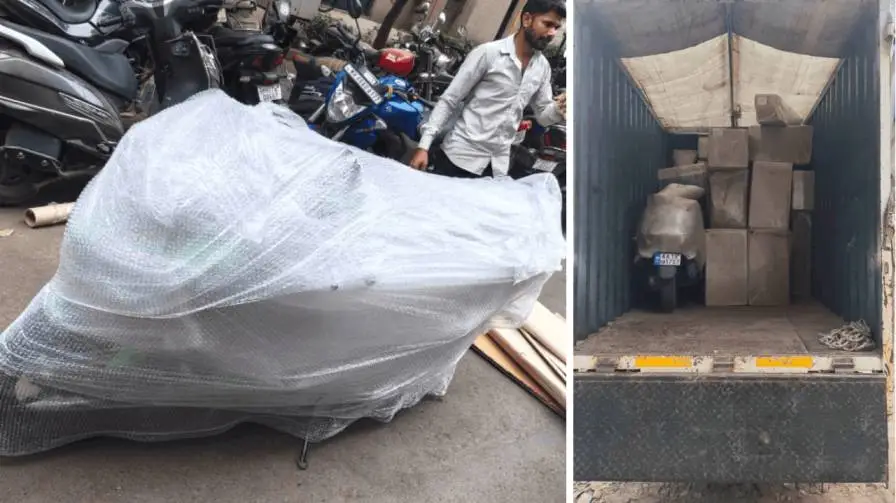
Moving office assets from Goa to Nagpur
An office move here means relocating physical assets: desks, chairs, storage units, files, small equipment and boxed supplies. It does not include setting up networks or reinstalling systems unless that is agreed separately.
- Prepare an asset list with tags or numbers, so each item can be matched at both ends
- Get written authorisation from the employer for the assets to leave and to be handed over
- Name a receiver at the Nagpur site, with a phone number, who can accept and sign
- Share a layout plan, so items can be placed once and not moved twice
- Back up data and remove sensitive media yourself, and decide who disconnects and reconnects equipment
- Ask the site for its security window, gate pass process and loading-bay hours before fixing the arrival day
Office assets and personal goods should never share one undifferentiated pile. Keep them as separate consignments, because they have different owners, receivers and delivery points.
Choosing a mover for this route
For a move of this length, the quality of the written scope tells you more than any headline price. A reasonable quote lets you answer these questions without guessing.
- Is the scope based on an inventory and on access details at both addresses?
- Does it state what is included and what is separate, once, in plain words?
- Does it name the load type, the dispatch date and the expected delivery window?
- Does it say how vehicles are handled and when they travel?
- Do the trade name and GST number on the quote match the business you spoke to? Several movers use similar names, so it is worth checking.
About ALPM
Agarwal Logistics Packers and Movers, also known as Agarwal (ALPM) Packers and Movers, is registered in Old Bowenpally, Secunderabad, Telangana, with GST number 36FDRPM0957B1ZC and trademark number 7901417. Enquiries go directly to +91 9467186002. ALPM works from your inventory and access details to write a service scope for household and few-item moves, office asset moves, and car and bike transport subject to carrier and model acceptance. Specialist crating or holding is offered only when it has been assessed and agreed.
Booking step by step
- Share your details: pickup and delivery addresses, floors, lift access, parking, preferred dates and a rough list of what is moving.
- Inventory and access check: the scope is based on what is actually being moved and how easily the vehicle can reach both doors.
- Written scope: it should show the load type, what is included, what is separate, and the dates.
- Confirm dispatch and delivery: agree the dispatch day, the delivery window and the named receiver at each endpoint.
- Packing and loading: count the packages as they are loaded and keep the number.
- Transit updates: agree beforehand how often you will hear from the coordinator and how.
- Delivery: check the package count, inspect items, note any concerns on the paperwork before signing, and confirm anything left open.
Documents, optional cover, claims, payment and cancellation
Documents
Confirm the applicable documents for the goods, route and carrier before dispatch. Commonly asked for are an ID copy for booking, an inventory list, and for vehicles a copy of the registration certificate, insurance and pollution certificate. For employer assets, a written authorisation and an asset list are sensible.
Optional cover
Do not assume cover is included. Ask whether it is offered, who the insurer is, what value must be declared, the premium, the exclusions, reporting deadline and how a claim is raised.
Claims
- Photograph items at pickup and on arrival
- Write down any damage or shortage on the delivery paperwork before signing
- Report concerns promptly in writing and keep invoices and inventory copies
- Ask for the claim process and expected timeline in writing, not verbally
Payment
Ask for the payment schedule in the quote: what is due when, and on what event. Keep receipts, and make sure the name on the invoice matches the business you booked.
Cancellation
Ask what notice is needed and whether any charge applies once a crew or vehicle has been allotted. Also ask what happens if you need to change the date.
Home versus employer delivery worksheet
If your relocation involves both household goods and employer assets, confirm a separate destination and receiver for each. Nagpur’s official MIHAN project description presents the area as combining airport and special economic zone use with commercial and residential context. An address that says only MIHAN, Hingna or Wardha Road therefore does not tell a mover whether the gate belongs to a home or to a company. Fill in this worksheet once for each consignment.
| Question | Home consignment | Employer consignment |
|---|---|---|
| Whose goods are they? | Your personal household goods | Assets that belong to the employer or business |
| Where exactly does it go? | Building, wing, floor, lift and landmark, for example in Manish Nagar, Besa or along Wardha Road | Company name and gate, not only the area name |
| Who receives? | You or a named family member with a phone number | A named employee authorised to accept, with a phone number |
| What authorises release? | Your own instruction | Written employer authorisation for assets to leave and be handed over |
| What list travels with it? | Room-wise inventory | Asset-tag list matched to the new layout |
| When can it arrive? | Building or society timing for vehicles and lifts | Site security window, gate pass and bay hours |
| Package count | Number at pickup and at delivery, recorded | Same, recorded separately from the home count |
| If the receiver or keys are missing | Agree changed arrival, waiting time or an assessed holding price | Same, plus who at the employer can resolve it |
Personal goods are not automatically delivered to an employer site, and office assets are not automatically delivered to a home. Ask the mover to confirm in writing where each consignment is going.
An illustrative job-transfer plan
Use this illustrative plan to separate a household delivery, employer asset handover and vehicle arrival.
Imagine a family of three moving from Goa to Nagpur because one parent has a new role at an employer site near MIHAN. They rent a 2 BHK flat off Wardha Road, and the employer is also sending some desk equipment and a few boxed files along.
- The family splits the move into three consignments: the household, the office assets, and one car on a carrier.
- First-night essentials, documents, medicines and a few days of clothes stay with the family and travel with them.
- The household consignment goes to the flat. A named family member holds the keys and the lift booking, and the package count is written down at loading.
- The office assets get a separate asset list, a named receiver at the employer, an authorisation note and a gate contact. They are not mixed into the household load.
- The family asks the mover to state where each consignment goes, and to confirm the package count for each endpoint.
- They keep two dates apart: the day the carrier arrives in Nagpur, and the day the building or site is ready to accept. If keys or the receiver are not ready, they have already agreed a changed arrival, a waiting charge or an assessed holding price.
- The car travels on its own calendar, with its own handover inspection and its own delivery date.
Receiving in Nagpur
Confirm the receiving details before dispatch, then update the building or site when the carrier gives a revised arrival window.
Residential deliveries
- In Wardha Road, Manish Nagar and Besa, give the exact building, wing, floor and lift details, and a nearby landmark the driver can find
- In Dharampeth, Sadar and Ramdaspeth, ask the building or neighbours whether a large vehicle can reach the door
- If it cannot, ask the mover whether a smaller vehicle or hand-carrying from the road is needed, and whether that is priced separately
Employer sites
- For a Hingna or MIHAN company site, confirm the gate, the authorised receiver, the gate pass process and the security window
- Ask the site what its own procedure is for incoming vehicles, instead of assuming one
On the day
- Check the package count against the number recorded at loading
- Inspect items and note any concerns on the paperwork before signing
- Confirm whether reassembly or technician work is included, or separate, before the crew leaves
- Keep your own written record of anything left open, and send it in writing the same day