

Packers and Movers Goa to Kochi: Budgets, Route and Receiving Plan
For a 2 BHK move from Goa to Kochi, use Rs 18,200 to Rs 27,000 as a whole-move planning guide after assessment. Checked city-reference driving routes are about 780 km. Dedicated road transit is indicatively 2 to 3 days after dispatch, with packing and unloading scheduled separately; shared loads have a 5 to 7 day pickup-to-delivery guide including consolidation. Confirm the service scope, exact addresses and arrival window in writing.
Goa to Kochi moving overview
| Road reference | About 780 km; exact Goa pickup, goods route and Kochi gate vary |
| 2 BHK whole-move guide | ₹18,200–27,000 for agreed standard packing, loading, transport and unloading |
| Dedicated timing | Indicative 2–3 days road transit after dispatch; packing and unloading additional |
| Shared timing | Indicative 5–7 days pickup to delivery, including consolidation |
| Coastal readiness | Pack dry goods; agree covered unloading and dry receiving space before arrival |
Get Free Quote
On this pageView sections
Goa to Kochi packers and movers charges: household budget guide
Compare household quotes using the same inventory and service scope. A furnished flat, a lightly furnished rental and a home with many fragile pieces can need different handling even when the bedroom count matches.
The figures below are whole-move planning guides for household shifting after the inventory and access have been assessed. They assume the agreed standard packing, loading, transport and unloading, counted once. They are not a fixed tariff or a confirmed quote. Your written quote replaces them.
| Home size | Whole-move planning guide |
|---|---|
| 1 BHK | Rs 11,500 - 17,700 |
| 2 BHK | Rs 18,200 - 27,000 |
| 3 BHK | Rs 27,500 - 39,500 |
| 4 BHK / villa | Rs 39,200 - 56,500 |
What the budget guides cover, and what a quote should state separately
A planning guide is only useful if you know what sits inside it. The guides above cover the agreed standard packing, loading, transport and unloading for the home you described. Anything beyond that should appear on your quote as its own line, written once and clearly, rather than as a surprise on moving day.
Ask the person preparing your quote to mark each item below as either included or separate, and to name the amount if it is separate.
| Item | What to look for |
|---|---|
| Fuel, tolls and applicable tax | A clear statement of whether each is included in the figure or added on top |
| Optional transit cover | Whether cover is offered, what it protects, who issues it and what it costs, all in writing |
| Difficult access | Long carries from door to truck, no lift, stairs, narrow lanes or restricted unloading hours at either end |
| Specialist crating | Items such as a glass top, a large mirror, an antique piece or a piano that need a made-to-fit crate, assessed and agreed first |
| Technician work | Disconnecting and reconnecting air conditioners, geysers, gas lines or washing machine plumbing |
| Holding or storage | Whether goods may need to wait at either end, and if so where, for how long and at what charge |
Two things to avoid when comparing quotes. First, do not add packing material or labour on top of a whole-move figure that already includes agreed standard packing and loading, or you will count them twice. Second, do not compare a whole-move figure against a quote that only prices the truck. They answer different questions.
Goa Kochi distance by road and moving time
The checked city-reference alternatives use the west-coast corridor. Navigation tools checked on 17 October 2026 gave 776 km on NH 66 with a driving time of a little under 16 hours for a car, and 783 km using NH 544 and NH 66 with a similar time. The loaded goods route still depends on vehicle suitability and your actual pickup and delivery gates.
Treat that car-driving figure carefully. A passenger car driven without stops is not a loaded truck. A goods vehicle moves more slowly, the crew must rest, and the vehicle may be held for weather, road works or a rest break. That is why the planning ranges below are quoted in days, not hours.
- Dedicated truck: about 2 to 3 days of road transit after the vehicle actually leaves Goa. Packing and loading come before this, and unloading in Kochi comes after it.
- Shared load: about 5 to 7 days from pickup to delivery, because the goods travel with other consignments and the vehicle is filled before it leaves.
- Your own dates: packing time at Goa depends on the size of the home, and unloading time at Kochi depends on access, so the first and last days of any move are rarely the same length.
Confirm the packing slot, expected dispatch and receiving window together before booking. The monsoon months and festival weeks can stretch them, so give your coordinator the real date you need to be in the new home and let them tell you whether it is realistic.
Full house shifting: furniture, appliances and fragile items
A full home move from Goa to Kochi is a long journey with road vibration for much of it, so packing is built around how each kind of item behaves on the road, not around a single box size.
Furniture
Wardrobes, beds, sofas and dining tables are protected with padding and wrapping so edges and polished surfaces are not rubbed against each other or the truck wall. Large pieces that can be taken apart are dismantled where practical, with screws and fittings bagged and labelled, then reassembled at the new home. Ask who will do the reassembly and whether any piece is a fixed unit that a carpenter should handle.
Appliances
Refrigerators, washing machines, televisions and microwaves each have their own transport needs. A refrigerator should be empty, defrosted and dry before it is closed. A washing machine usually has transit locks or bolts that the manufacturer specifies. A television travels best upright in its original box or a proper carton with firm corner protection. Where an appliance has a manufacturer carrier preparation step, have the right person do it.
Fragile items
Glassware, crockery, framed pictures and decor go into smaller cartons with cushioning on every side, with the heavier items at the bottom. A carton of mixed fragile items is easy to over-pack, so ask the crew to keep fragile cartons small enough to lift safely, and to mark them clearly.
Clothes, linen and books
Fabric and paper items need particular care if they are damp before packing. They need to be fully dry before packing. The dry-packing worksheet further down this page explains what to prepare.
Before packing day, walk through each room with whoever is assessing the move and point out the items you consider fragile, valuable or irreplaceable. Anything unusual should be written into the inventory so it is not discovered on the day.
Few items shifting from Goa to Kochi
Not every move needs a full truck. Students, professionals taking up a posting, couples combining households and families sending ahead a few pieces of furniture often have only a small load. A few-item move from Goa to Kochi can be assessed, but it is priced differently from a whole home.
Small loads are assessed from a list. Send an item-by-item list with approximate sizes, and photographs where you can, so the coordinator can see what is involved. A short list of boxed cartons is a very different job from one large wardrobe or a sofa.
- Ask how your goods will be allocated. A small load is usually given a defined space in a vehicle, or a defined item list, and the quote should say which.
- Ask whether a minimum allocation applies, so that you do not pay for a very small load as though it were larger, or find that your load does not fit the space.
- Ask whether the load is shared, in which case the 5 to 7 day planning range applies, or on its own vehicle.
- Ask what packing the guide includes and whether anything you pack yourself is accepted.
The household guides on this page are for a full home of a given size and do not apply to a few items. Your quote for a small load is assessed from your list, not read from the table above.
If you are packing some items yourself, keep them dry, use small manageable cartons and mark which side is up. Ask how customer-packed items are accepted, inspected and described in the service and cover terms.
Office relocation from Goa to Kochi
An office move from Goa to Kochi is mostly an organisational exercise with a transport step in the middle. Desks and chairs are the easy part. The delicate parts are the computers, the records and the question of who is allowed to release and receive them.
Authorised release
Make sure the person who instructs the move has the authority to do so, and that the building or landlord permits the removal. Ask both buildings what release or gate documentation they require. Name the people authorised to release goods in Goa and receive them in Kochi, using the written format your organisation requires.
IT contact
Name one person who knows the network, the workstations and any servers. That person should disconnect, label and photograph cabling, decide which equipment is switched off properly before packing, and be present at Kochi to reconnect it. Packing crews handle the equipment, but they should not be expected to know your network.
Records and files
Count the file boxes before they leave and again on arrival. Mark boxes by department, and keep confidential or legally sensitive records with a responsible staff member or in a separately agreed arrangement. Do not mix loose papers with equipment cartons.
- Prepare a floor-wise inventory with desk, workstation and cabinet numbers.
- Agree the schedule so work can continue at the old office until the last possible moment.
- Confirm the receiving date, time and lift booking at the Kochi building.
Office moves are priced after the assessment, and no table figure is given here. Specialist crating for any single item, such as a server rack or a large display, is considered only when it has been assessed and agreed in writing.
Car and bike transport from Goa to Kochi
Car and bike transport from Goa to Kochi is assessed as a vehicle service, whether or not your household is moving too. The figures below are vehicle transport planning guides by vehicle category, to be confirmed after your vehicle and collection details are known.
| Vehicle | Vehicle transport planning guide |
|---|---|
| Standard bike | Rs 3,800 - 5,300 |
| Heavy bike | Rs 5,600 - 7,400 |
| Hatchback | Rs 6,500 - 9,000 |
| Sedan or SUV | Rs 9,500 - 13,000 |
These guides are not a promise of availability. Whether a closed carrier is available on your dates is confirmed when you enquire, and the type of carrier, the exact model of the vehicle and the place of collection and handover should all be written into the quote.
- Share the make, model, year and registration of the vehicle, and tell the coordinator about any modification or low ground clearance.
- Say whether the vehicle runs. A non-running vehicle needs different handling.
- Agree where the vehicle will be collected in Goa and where it will be handed over in Kochi, and who will be present at each.
- Photograph the vehicle on all sides before it is loaded, and note any existing marks on the paperwork.
- Remove personal belongings, and agree in writing whether any items may stay inside.
Do not assume that insurance is included. If a line on the quote is called a protection fee, ask in writing what it actually is, who issues it and what it covers. Any insurance should be described in terms you can read, with no assumed percentage and no assumed discount for combining a vehicle with a household move. Ask the same for the carrier: what exactly is the vehicle loaded onto, and is it the carrier you were told about?
Record the odometer, existing marks and the keys handed over. Follow the carrier’s written model-specific preparation instructions, and keep the required vehicle documents available. Agree a separate delivery window if the vehicle is travelling independently of the household load.
Planning the Goa pickup
Whether you are leaving a flat in Panaji, a house near Margao, a quarter in Vasco, an apartment in Mapusa or Porvorim, or a rental in a beach-belt village, what decides the pickup day is access, not the address alone.
- Truck access: can a full-size goods vehicle reach the building entrance, and for how long can it stand there? Narrow lanes, gated housing societies and village roads can all mean a smaller vehicle or a longer carry.
- Society rules: many apartment buildings limit moving hours, require a deposit or want notice for lift use. Ask your society office and tell the coordinator the rules in writing.
- Floors and lifts: the number of floors, whether a lift is working and whether it can take a wardrobe all affect crew time.
- Parking: a reserved space on the road, or a permit if needed, saves delay on the day.
- Weather: during the monsoon, plan for covered loading where possible and keep a dry route from the door to the truck.
Tenants should also confirm the handover date for the keys with the landlord and make sure the deposit and condition check do not clash with the loading time. If you are moving out of a rented place and the landlord needs to inspect it, agree its timing with the landlord and moving coordinator so the release of goods and keys is clear.
The pickup address you give also helps set the route length. A pickup in the north of the state and one in the south differ by tens of kilometres before the highway even starts, so give the exact address and not just the city.
Kochi, Cochin and Ernakulam: giving the exact receiving address
People search for Goa to Cochin movers, Goa to Ernakulam shifting and packers and movers Goa to Kochi as though they were three different places. In practice the names overlap. Cochin is another English name used for Kochi, and Ernakulam is the district to which Kochi belongs. The official Ernakulam district website, in a page updated on 8 October 2026, ties the district to Kochi and to coastal commerce.
That matters for a mover because the whole district is not one drop point. A delivery in Kakkanad and a delivery in Fort Kochi are very different jobs, and they can be a considerable distance apart. The quote should name the exact area and building, not just the district.
Examples of receiving areas to specify include Kakkanad and Thrikkakara, Edappally and Kalamassery, Vyttila, Kadavanthra and Kaloor, Fort Kochi and Mattancherry, and Aluva. Each is a different drop with different access and distance.
When you ask for a quote, send the following for the Kochi end:
- The full address, including building or apartment name and a nearby landmark.
- The floor number and whether a lift is available and large enough.
- Whether a full-size goods vehicle can reach the door, or whether goods must be carried from a distance or moved into a smaller vehicle for the last stretch.
- The permitted unloading hours and any notice or deposit the building requires.
- The name and phone number of the person who will be present to receive the goods.
Please do not assume that any particular road, ferry, bridge, port area or restricted zone is open to a loaded goods vehicle. Ask your coordinator to confirm access to your exact address for your delivery date. The same applies to any government, defence or institutional campus, where entry rules are set by the campus and not by the mover.
Dry-packing and covered-receiving worksheet
Keep upholstery dry before it is covered
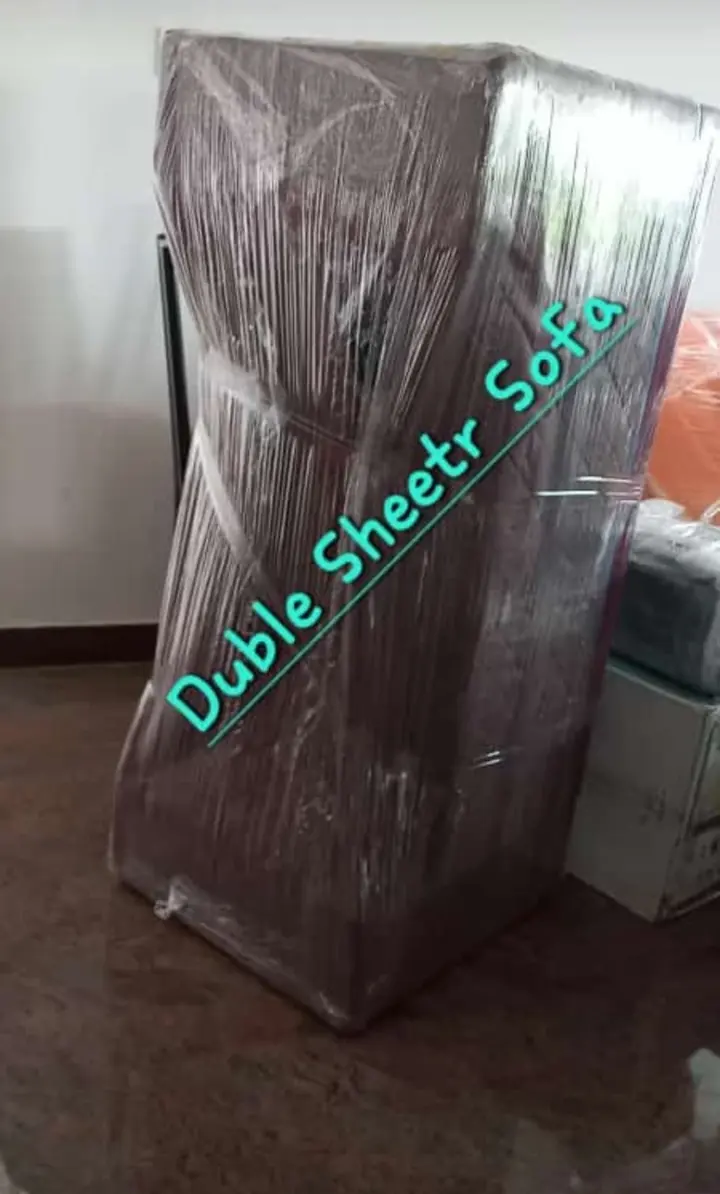
Protective wrapping can help keep upholstery clean during the carry, but it cannot dry damp fabric. The covered sofa in this photograph makes the preparation before wrapping worth discussing.
For a Goa to Kochi move, make sure the sofa is dry and tell the team about delicate fabric or existing marks. Check the dimensions and carry path at both homes. Agree a covered receiving point and how the protection will stay in place through any exposed part of unloading.
At the new room, inspect the outer packing before opening. Photograph and report any wet or damaged covering promptly through the agreed handover process.
Goa and Kochi are both coastal, and a move between them can cross heavy rain, damp air and long hours in a closed vehicle. Goods that go into a box damp usually come out of it damp, and the box itself will not fix that. This worksheet is a practical way to prepare at both ends.
Part 1: dry packing in Goa
Go through the items below before packing day. The aim is that nothing is sealed while it is wet, and that anything that is not ready is dealt with before loading, not discovered on arrival.
| Item | Before it is sealed | If it is not ready |
|---|---|---|
| Refrigerator | Empty, defrosted, drained and wiped dry. Follow the manufacturer’s transport instructions, including any rule about how long to wait before restarting. | Agree a later packing slot, or move it as a separately assessed item |
| Washing machine | Drained and dried. Have the manufacturer’s transit locks fitted by a qualified person if the model needs them. | Agree to leave it out of the load or to assess it separately |
| Linen, clothes and curtains | Completely dry, including bags kept on balconies or in outhouses | Dry them before packing, or agree to pack them last |
| Mattresses and cushions | Dry on both sides and kept clean in a dry covering | Delay packing until they are dry |
| Books and papers | Dry, in small cartons that one person can lift safely | Dry them out first, and keep any damp or mouldy book out of the carton |
| Wooden furniture | Wiped clean and dry before wrapping | Wait for it to dry, then wrap |
| Electronics | Powered down and dry, in the original box if it is still available | Wait until fully dry before packing |
Please do not seal wet or damp goods and rely on a packet of desiccant, a special film or a chemical coating to fix the problem. There is no universal product that guarantees dry goods after a monsoon-season journey. If something is not ready on packing day, agree the plan with the coordinator before loading. That might be later packing, leaving the item out or a separate assessment, and no fee should be added automatically.
Appliances that run on gas or water, and air conditioners, need to be disconnected by a qualified technician. Cylinders, flammable liquids, fuel and other dangerous goods do not belong in a household load. If you have regulated items, declare them and ask the coordinator to confirm the current requirements with the carrier and the relevant authority.
Part 2: covered receiving in Kochi
Confirm the receiving arrangements with the property manager and moving coordinator. If a covered point is unavailable, agree how goods will be protected or whether the unloading slot should change. Ask the person receiving the goods to arrange the following before the truck arrives.
- A roofed or covered unloading point close to the door, with a dry route into the building.
- A dry indoor area where cartons can be stacked off the floor for the first day, without blocking exits, stairwells or fire routes.
- The package list, so every carton can be counted against it. Note the count on delivery.
- A camera ready. If the outer packaging looks wet when it is unloaded, photograph it before it is opened.
- A safe inspection of contents for any wet cartons, done at the time or as soon as possible.
- Manufacturer restart instructions for the refrigerator and other appliances, and a qualified technician if there is any doubt about moisture in electronics.
Do not switch on any electronic item that may have been affected by moisture until a qualified technician or the manufacturer’s instructions say it is safe.
An illustrative rainy-arrival plan
Illustrative rainy-arrival planning example: Suppose a family is moving into a third-floor flat in a Kochi apartment building, and heavy rain is forecast for delivery day.
- The day before, the receiver asks building management for the service lift and a covered stretch near the entrance, and confirms the unloading hours.
- The receiver clears a dry corner of the living room and keeps the main door route free.
- When the truck arrives, the receiver counts cartons against the list as they come off and notes any that look wet.
- Wet cartons are opened first, photographed and checked while the crew is still present, and the notes are written on the delivery paperwork.
- Electronics and the refrigerator are left switched off until the manufacturer’s rest time has passed and, if needed, a technician has checked them.
None of this changes the weather. It does make sure that if something has gone wrong, it is visible and recorded on the day.
How to choose a mover, and who ALPM is
A long-distance move is a trust decision made on limited information, so it helps to know what to check. Here are checks that work for any mover, and are worth doing for us too.
- Match the name on the quote with the name on the tax invoice and the GST registration. Several firms use the name Agarwal, so the full registered name and registration number matter.
- Ask for the scope in writing: what is packed, what is loaded, what vehicle is used, what is unloaded and what is not.
- Ask who you will talk to before, during and after the move, and how updates are shared.
- Ask for the terms on damage, delay and cancellation before you pay anything.
- Be careful with quotes that are much lower than the rest. Ask what has been left out.
Agarwal Logistics Packers and Movers, also called Agarwal (ALPM) Packers and Movers, is registered at Old Bowenpally, Secunderabad. Our GST number is 36FDRPM0957B1ZC and our trademark registration number is 7901417. You can reach the team directly on +91 94671 86002.
We handle household moves, small loads, office relocations and car and bike transport. Specialist crating, and any holding of goods at either end, are offered only when the item or situation has been assessed and the terms are agreed in writing.
Ask who assesses the inventory, who coordinates loading and who handles delivery questions. Keep those names and contacts with your quote and signed package list.
How the move runs, from enquiry to unloading
A well-run Goa to Kochi move follows the same sequence each time. Knowing it in advance lets you spot where something is missing.
- Enquiry. You share the pickup address, the exact Kochi receiving address, the date you need and a general description of what is moving.
- Inventory. A video call, photographs or a visit let the coordinator see the rooms, the access and any special items. Everything fragile, heavy or valuable is listed.
- Written scope and guide. You receive a written quote that names the service, vehicle type, what is included, what is separate and the timing basis.
- Confirmation. You agree the date, the shared or dedicated choice, the payment terms and any optional cover, and you tell your building about the move.
- Packing and loading. The goods are packed and loaded, and you check the list against what is loaded before the vehicle leaves.
- Transit. The vehicle travels along the coast. Agree beforehand how and when you will hear about its progress.
- Unloading and checking. The receiver counts packages, inspects the contents and notes any problem on the paperwork on the day.
- Follow-up. If anything needs attention, you raise it promptly and in writing with the evidence you gathered.
Inventory and access deserve attention before the price is confirmed. A vague inventory leads to a quote that changes, and an unchecked access detail leads to a delay on the day. Spending a little extra time on those two steps at the start saves far more at the end.
Paperwork, employer reimbursement, optional cover, claims, payment and holding
Paperwork
The documents you need depend on what is travelling. Ask your coordinator which ones apply to your move. Usually you should expect to provide identity and address details for the booking and an inventory list. If a car or bike is moving, have the registration papers to hand. For an office, have the written authorisation described earlier. For rules covering the movement of particular goods, ask the coordinator to confirm the current requirements with the carrier and the relevant authority, since they can change.
Employer reimbursement
If your employer is covering part of the move, read the employer’s policy before booking. Find out what documents it asks for, such as an invoice in a particular name or a particular format, and tell the coordinator in advance. Whether a claim is accepted is the employer’s decision, so confirm what is needed before you pay and not after.
Optional cover
If you want protection for loss or damage in transit, ask whether cover is offered, who issues it, what it covers, what it excludes and what it costs. Get it in writing. Decide on the value you want protected and keep a record of high-value items.
Claims evidence
If something arrives damaged or missing, evidence is what makes a claim workable. Keep the inventory, the loading list, the photographs of packaging at delivery, the package count and any note on the delivery paperwork. Report the problem promptly. What can be claimed depends on the written terms and on whether any cover was taken.
Payment and cancellation
Ask in writing how much is due in advance, when the balance is due and how payment is made. Ask what happens if you need to move the date or cancel, and at what point any charge applies. Keep copies of receipts.
Holding goods
Goods are held at either end only when that has been assessed and agreed. If you think your move might need a gap, such as a delay in the new home being ready, raise it at the quote stage. The quote should then say where the goods would be held, for how long, at what charge and under what terms. Do not assume that holding is available or free.
Common mistakes and a final checklist
Mistakes to avoid
- Choosing on the lowest figure without comparing the scope. Two quotes are only comparable when they cover the same packing, vehicle and unloading.
- Giving only the city, and not the exact Kochi gate or building. The district is not a drop point.
- Assuming a fixed delivery date from a planning range. Indicative days are not a promise.
- Packing damp goods and relying on a product to fix it.
- Letting the building at either end learn about the move on the day.
- Forgetting to ask whether fuel, tolls, tax, access difficulty, crating, technician work and holding are in the figure or separate.
- Leaving the receiver unprepared for rain at Kochi.
- Not photographing a vehicle before loading.
Final checklist
- Exact pickup address and exact Kochi receiving address given.
- Inventory shared, with fragile, heavy and valuable items marked.
- Written quote received, naming service, vehicle and timing basis.
- Inclusions and separate items marked on the quote.
- Shared or dedicated choice made, with a realistic date.
- Dry-packing worksheet completed, and a plan agreed for anything not ready.
- Covered receiving arranged in Kochi, with someone present to count packages.
- Building permissions arranged at both ends.
- Registered name, GST number and payment terms checked.
- Documents for vehicles, offices or employer reimbursement prepared.
- Photographs taken of vehicle and valuables before loading.
- Delivery paperwork checked and noted on the day.